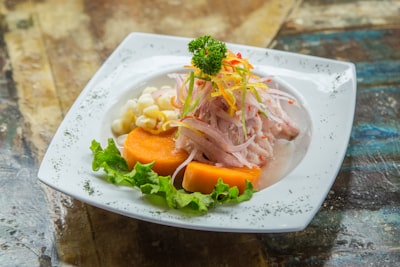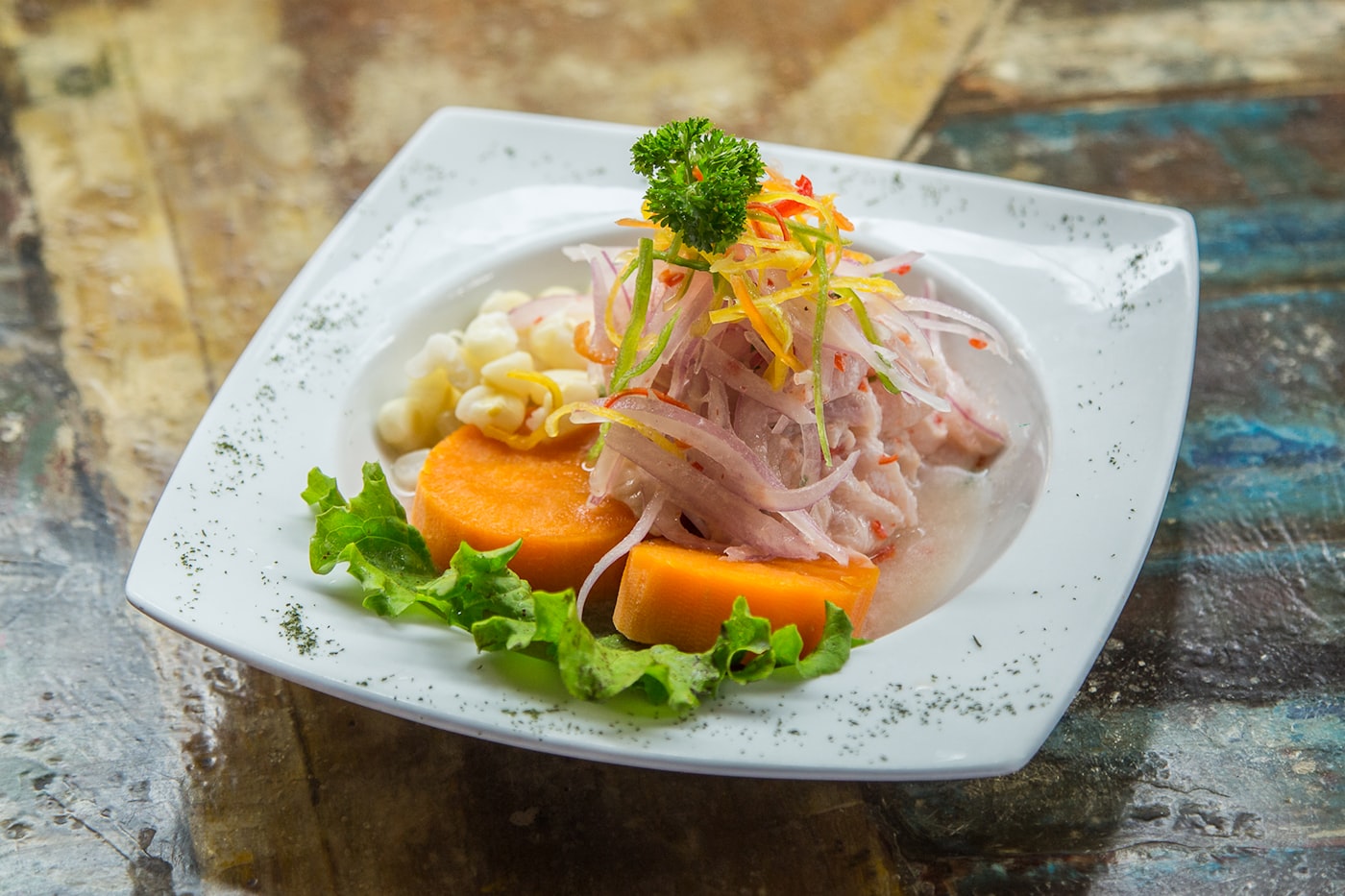
If you've eaten ceviche in Dubai before — at a Peruvian restaurant or a fusion spot — you may think you know what ceviche is. Raw fish, acid-cured in lime juice, served cold with onion, chilli and corn. The Peruvian version is extraordinary, and it's rightfully become a global phenomenon.
But Ecuador's ceviche is a completely different dish. Different technique, different ingredients, different flavour profile, different accompaniments. The two countries share a border, a name for the dish, and a love of seafood — and almost nothing else on this subject. Understanding Ecuadorian ceviche reveals a fascinating parallel culinary tradition that, in Dubai, is almost entirely hidden from view.
Ecuador vs Peru: The Ceviche Showdown
Types of Ecuadorian Ceviche to Know

Ceviche de Camarón (Shrimp Ceviche)
The most common and most beloved. Large cooked shrimp in a tomato-orange-lime sauce with pickled red onion and coriander. The sauce should be sweet-tart and deeply flavoured with ketchup as a base (yes, ketchup — don't be a snob, it works). Served in a large bowl with popcorn and chifles on the side.
Ceviche de Concha (Black Clam Ceviche)
Ecuador's most distinctive ceviche — black shellfish (concha negra) served raw in a citrus-coriander marinade, almost like oysters in a dressing. The black clams turn the sauce a remarkable dark colour. Rarely found in Dubai but occasionally available at specialist Ecuadorian spots. The most acquired taste in this guide — and the most rewarding.
Ceviche Mixto (Mixed Seafood)
A combination of shrimp, squid and white fish — the most generous version. The different textures (yielding shrimp, springy squid, delicate fish) give this ceviche a complexity that the shrimp-only version can't match. Good for sharing or as a main course. Most commonly available in Dubai.
Where to Eat Ecuadorian Ceviche in Dubai


How to Eat Ecuadorian Ceviche Properly
The Ritual
Taste the broth first — before adding anything, take a spoon of the tomato-citrus broth. That's the baseline flavour you're working with.
Add the ají de mesa — a small amount of the fresh green chilli sauce. Start with a half-spoon and adjust. This is the only place heat enters the dish.
Squeeze extra lime or orange — if you want more acidity, add it now. The house version is calibrated to be crowd-pleasing rather than intensely tart.
Add popcorn and chifles mid-bowl — not all at once at the start, which makes them soggy. Add a handful at a time to maintain contrasting textures throughout the dish.
Drink the remaining broth — like Peru's leche de tigre, the leftover sauce is considered the best part. Ecuadorians call it el fondo (the bottom) and it's not wasted.
Frequently Asked Questions
Is Ecuadorian ceviche safe to eat during Ramadan in Dubai?
Yes — ceviche ecuatoriano uses fully cooked shrimp, making it suitable for people who prefer not to eat raw fish. It contains no alcohol. However, restaurants may have reduced hours during Ramadan — always call ahead to confirm opening times.
What's the orange juice doing in Ecuadorian ceviche?
Orange juice adds sweetness to counterbalance the tomato acidity and rounds out the citrus profile. Many Ecuadorian recipes specifically call for bitter Seville orange (naranja agria), which is more sour than sweet but has a complex flavour that regular orange can't fully replicate. In Dubai, restaurants typically use a mix of regular orange and lime.
Can I order Ecuadorian ceviche for delivery in Dubai?
A few of the restaurants listed are on Talabat or Careem Now, though Ecuadorian ceviche suffers slightly on delivery — the popcorn goes soggy and the broth shifts. If possible, eat it fresh at the restaurant. For delivery, order the seco de pollo or encebollado instead, both of which travel better.
Compare the Ceviches: South America in Dubai