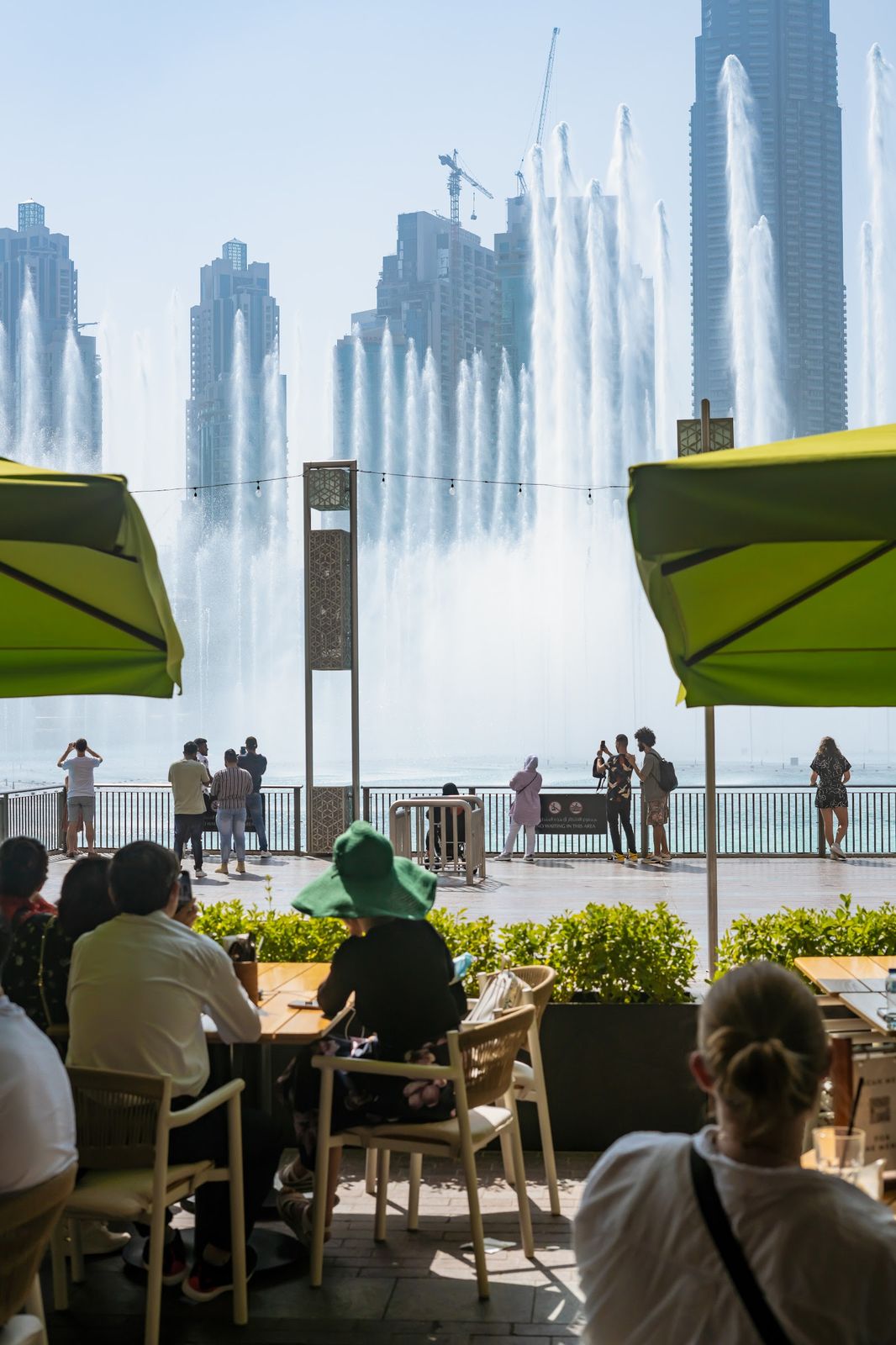
Can you eat omakase — a dining format historically built around sake pairings and mirin-glazed everything — and keep it halal? In Dubai in 2026, the answer is a confident yes, and this city might be the best place on earth to do it. Halal omakase in Dubai has quietly become its own category: a Michelin-starred chef's table that pairs courses with crafted mocktails, a Bib Gourmand counter that has never served a drop of alcohol, and an Emirati-run sushi-ya where the full trust-the-chef ritual starts under AED 200.
This guide ranks the seven counters worth your booking, in two honest tiers: rooms with no alcohol service at all, then licensed venues whose ingredients are halal-sourced but where wine lists exist. One universal rule sits above every entry — if cooking alcohol (mirin, sake in cures and sauces) matters to your practice, say so when you book. Every kitchen here has heard the question and the serious ones answer precisely.
Tier one: alcohol-free counters
#1 Moonrise
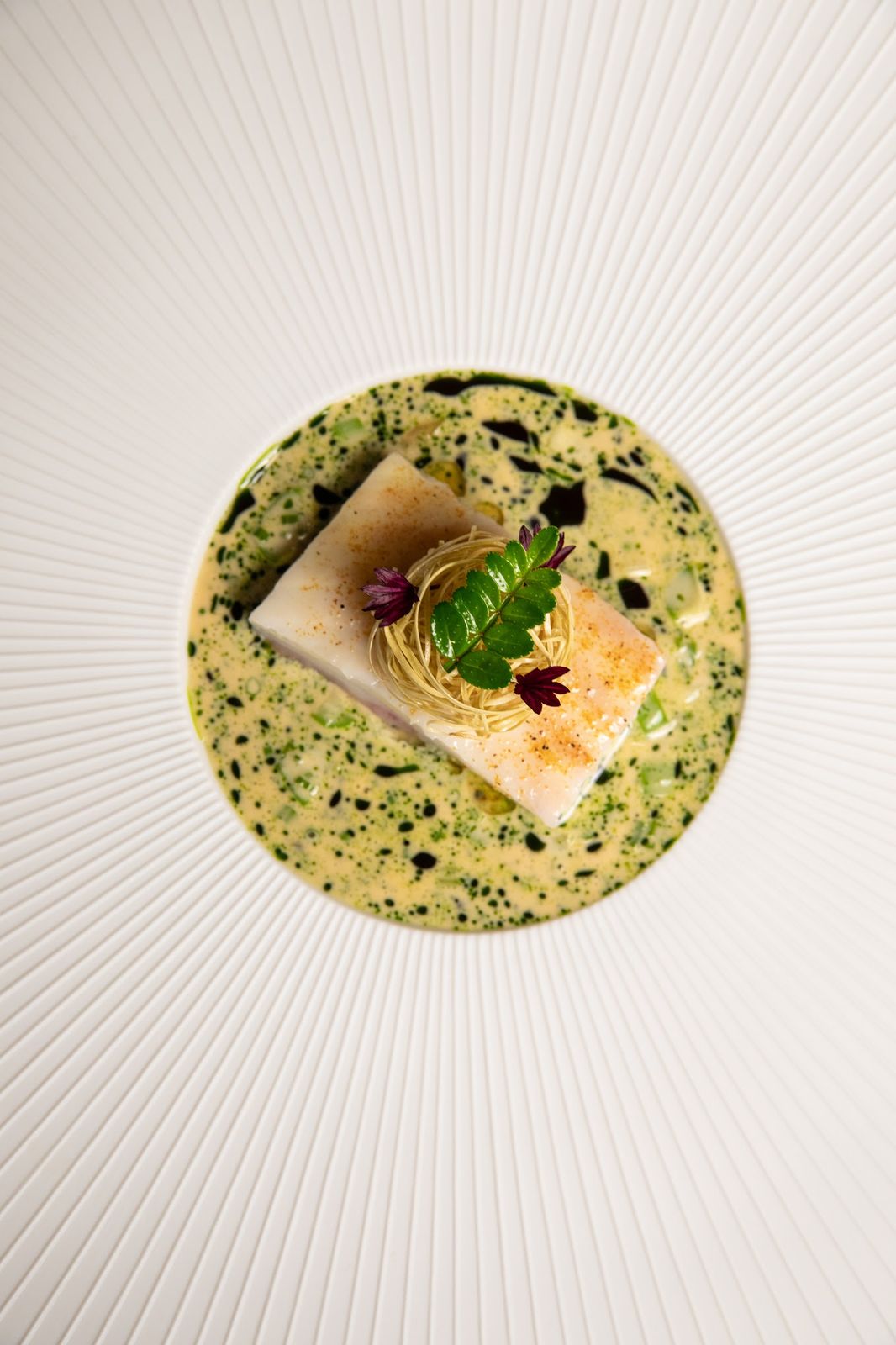
The headline act of halal fine dining in Dubai, full stop. Chef Solemann Haddad's rooftop counter above Eden House seats a handful of guests for a tasting menu that splices Japanese technique with Middle Eastern memory — think camel milk, date molasses and za'atar meeting binchotan and dashi — and it carries a Michelin star while pouring exclusively alcohol-free: the mocktail and tea pairings are composed with the same seriousness as the food. Booking is the hard part; seats release in waves and evaporate.
What to order there's one answer — the full tasting menu (AED 700–900 depending on season) with the non-alcoholic pairing. Surrender scheduling, not standards.
Best for: the once-a-year table; proving halal fine dining concedes nothing.
Insider tip: solo diners have the best odds of a short-notice seat — and the counter's corner position is the chef-conversation sweet spot.
#2 3Fils
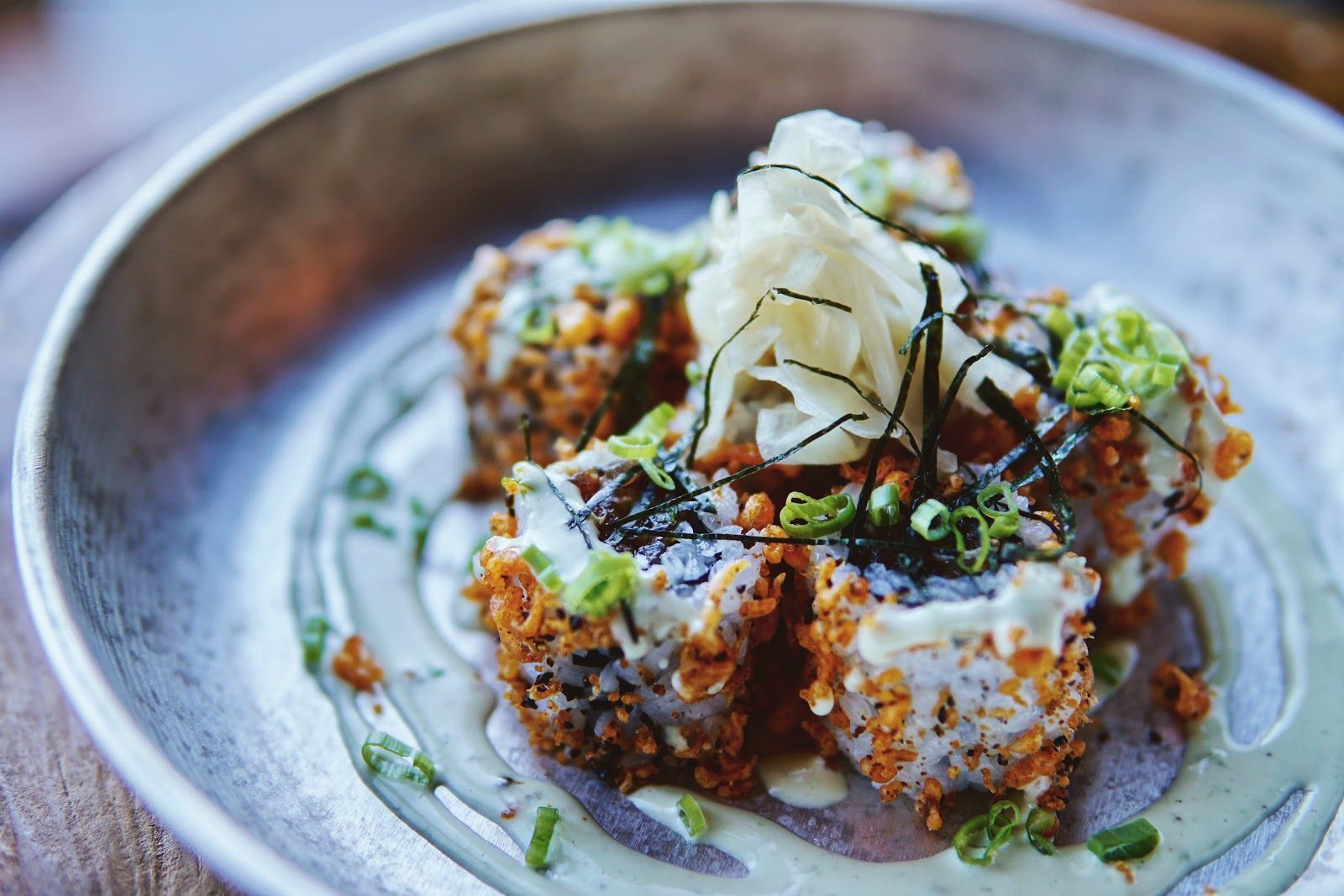
The restaurant that proved a tiny, unlicensed harbourside room could become one of the most celebrated kitchens in the Middle East. 3Fils has never served alcohol — the Jumeirah Fishing Harbour location guarantees it — and its Michelin Bib Gourmand cooking made that fact irrelevant: wagyu sliders with cult status, salmon tataki, and a ten-seat private sushi bar where the chefs run a proper trust-us sequence over the water. Dress down, queue happily, leave converted.
What to order at the counter, the chef's selection; in the main room, the spicy tuna crispy rice (around AED 70) and the wagyu sliders (about AED 95) are non-negotiable.
Best for: casual brilliance; first-timers to the trust-the-chef format.
Insider tip: sunset on the harbour terrace, then move inside to the counter — the fishing boats coming in are the amuse-bouche.
Read our full 3Fils review → Book a counter →
#3 Omakaseya
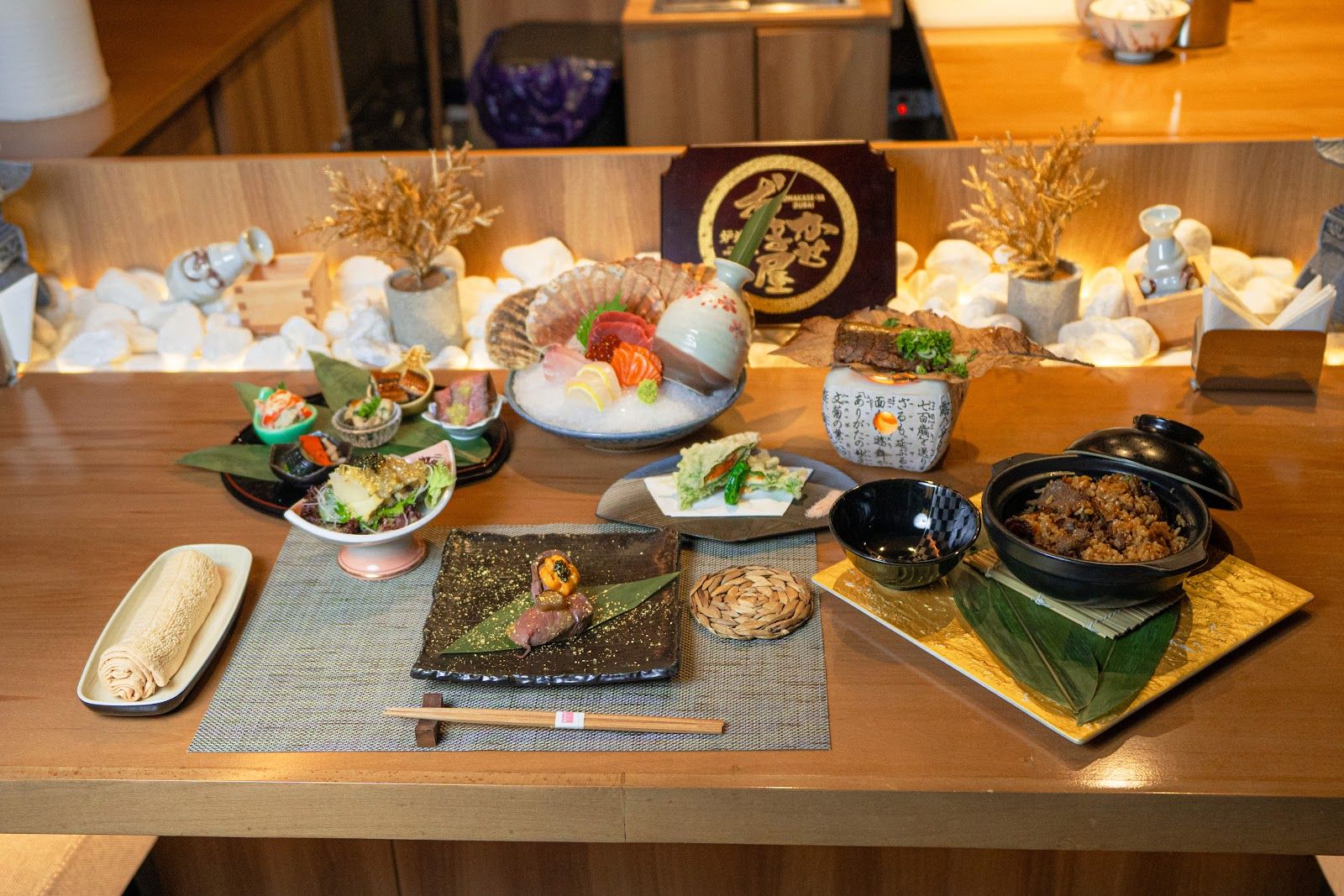
The democratiser. Tucked into the Sheraton Dubai Creek in old Baniyas, Omakaseya strips omakase of its intimidation: tiered chef's menus that start around AED 199, a warm wood-lined room that blends traditional Japanese design with Gulf hospitality, and a chef who narrates each course without theatre-school affectation. The fish quality at this price point is the running surprise; the Creek-side location makes it a natural pairing with an old-Dubai evening walk.
What to order the mid-tier omakase (around AED 299) hits the sweet spot — enough courses to feel the arc, priced like a regular dinner.
Best for: first omakase, repeat omakase, omakase on a Tuesday because you felt like it.
Insider tip: the counter's far-right seats face the prep station head-on — ask for them, and go hungry; portions run more generous than the format suggests.
#4 Goldfish Sushi & Yakitori
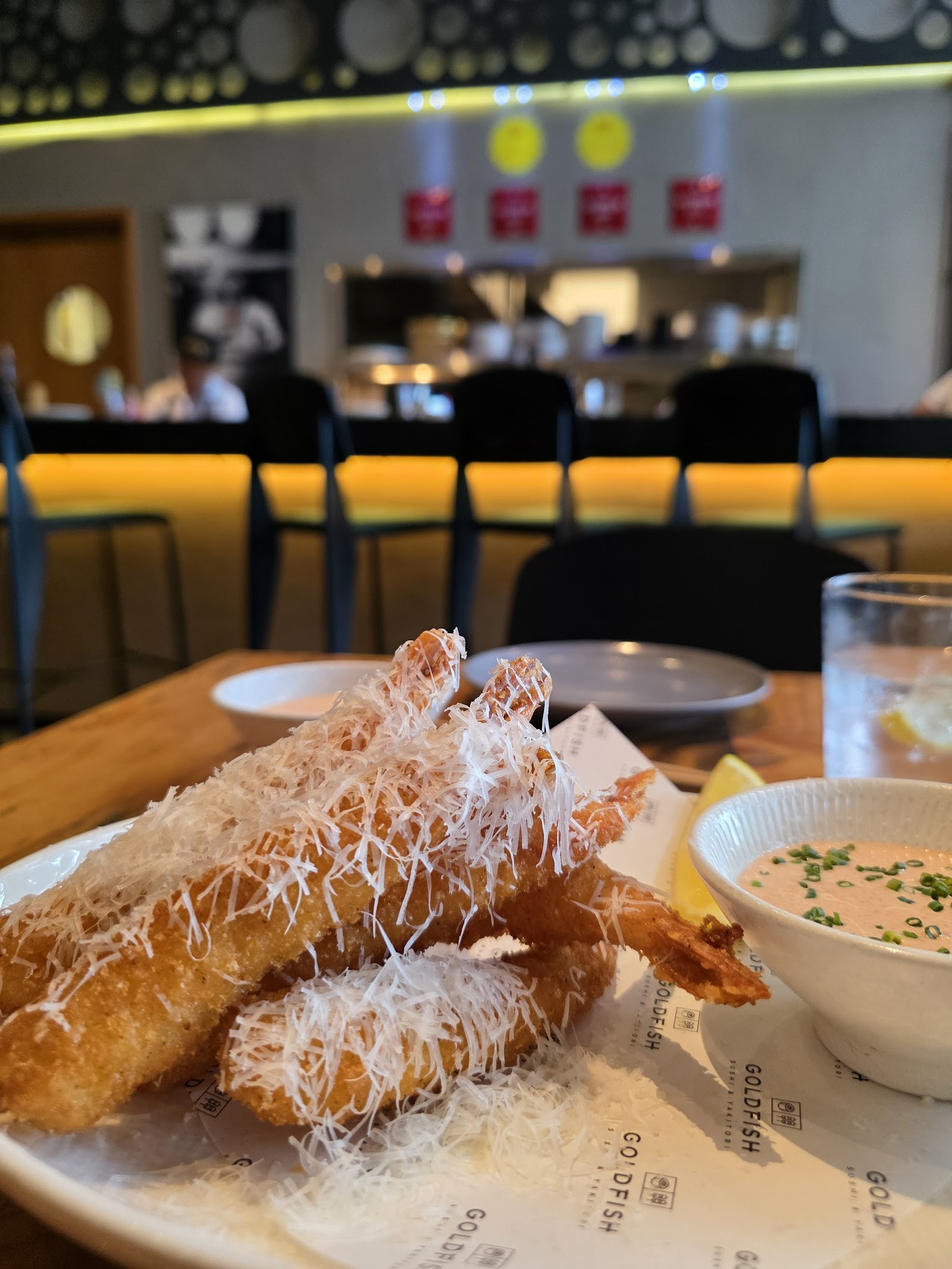
A Michelin Guide-listed neighbourhood sushi-ya on Al Wasl Road where the counter seats put you a metre from the binchotan. Goldfish runs à la carte rather than a formal omakase sequence, but ask the chefs to feed you — the unofficial "leave it to us" request — and you'll get the same arc: pristine nigiri, charcoal-licked yakitori, a tamago that ends arguments. The Jumeirah-villa-district setting keeps the room intimate and the focus on the fish.
What to order chef's choice nigiri (around AED 180 for a generous run) plus the chicken tsukune yakitori (about AED 42).
Best for: low-ceremony excellence; the weekly habit rather than the annual event.
Insider tip: counter seats are walk-in-friendly early — 6:30pm midweek you'll likely have the chefs to yourself.
Tier two: licensed rooms, halal-sourced kitchens
These counters serve alcohol to those who want it — but the food itself is built on the same halal-sourced supply chain as everything in this city, and all three will walk you through preparation details on request. We flag them honestly so you can decide where your line sits.
#5 TakaHisa
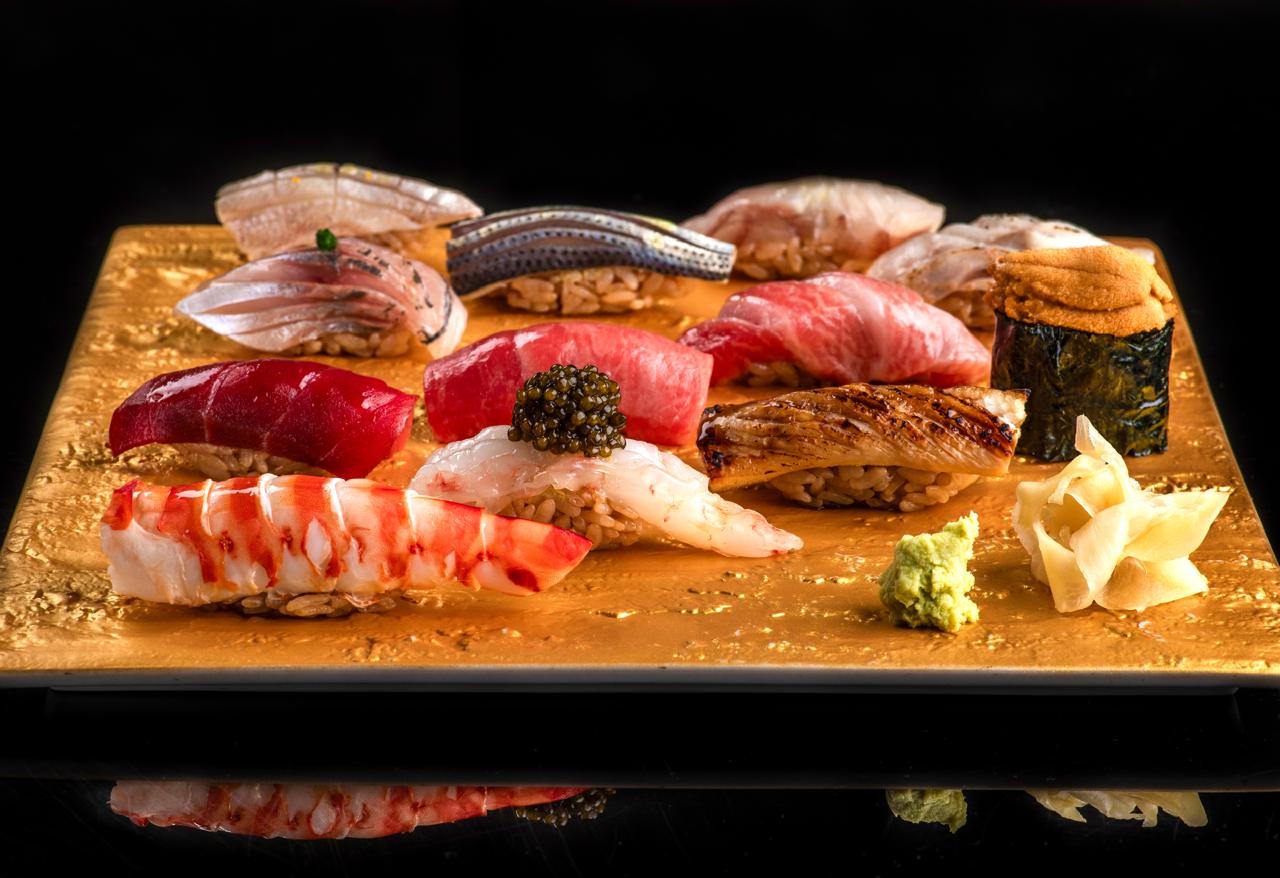
Dubai's most lavish omakase, ranked on MENA's 50 Best list and priced accordingly. Chefs Takashi and Hisao fly in Toyosu-market fish and A5-grade wagyu of absurd marbling, then serve a counter sequence that runs past two hours of edible one-upmanship. The room is licensed — sake pairings exist for those who partake — but the kitchen fields halal-practice questions with practiced precision, and the non-alcoholic pairing is treated as a first-class citizen, not an afterthought.
What to order the signature omakase (from around AED 1,000; the full wagyu-heavy run goes higher) — and say yes when the uni course is offered twice.
Best for: the celebration where the bill is someone else's problem; wagyu pilgrims.
Insider tip: lunch seatings occasionally run shorter, gentler-priced menus — the same fish, two-thirds the commitment.
#6 Hōseki
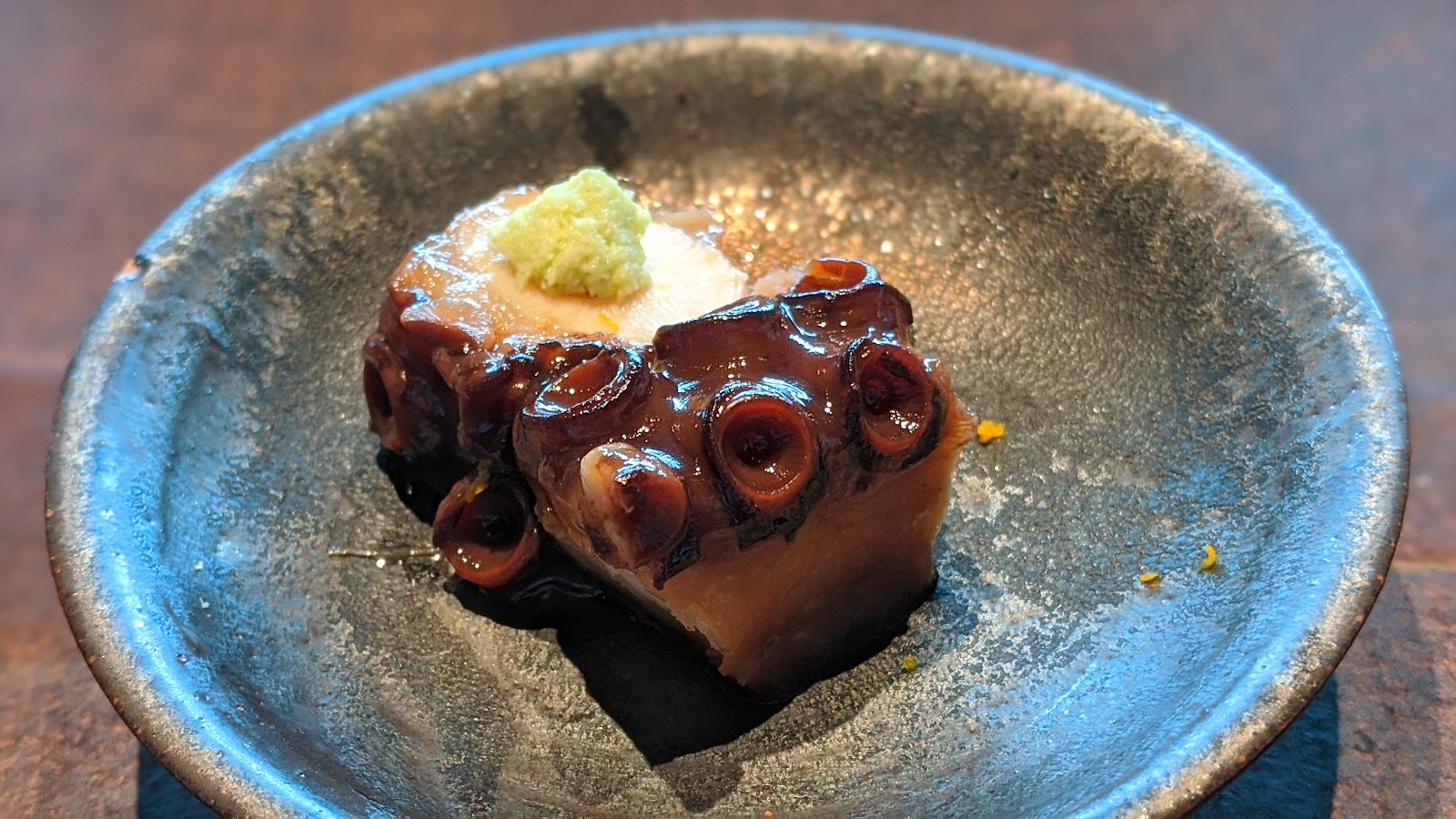
Nine seats inside the Bulgari Resort, one Michelin star, and the most monastic dining experience in the Emirates. Chef-led, glacially paced and almost silent at its best moments, Hōseki is omakase as meditation — the seasonal sequence moves through sashimi, simmered and grilled courses with jeweller's precision (the name means "gemstone"). Alcohol pairings exist; so does a thoughtful tea progression, and solo halal-conscious diners are handled with the discretion a room this size allows.
What to order the seasonal tasting (from around AED 1,000) with the tea pairing — the hōjicha service alone justifies the choice.
Best for: contemplative perfectionists; anniversary dinners where conversation can wait.
Insider tip: the early seating catches Jumeirah Bay's sunset through the glass — the only external event the room acknowledges.
#7 Mimi Kakushi
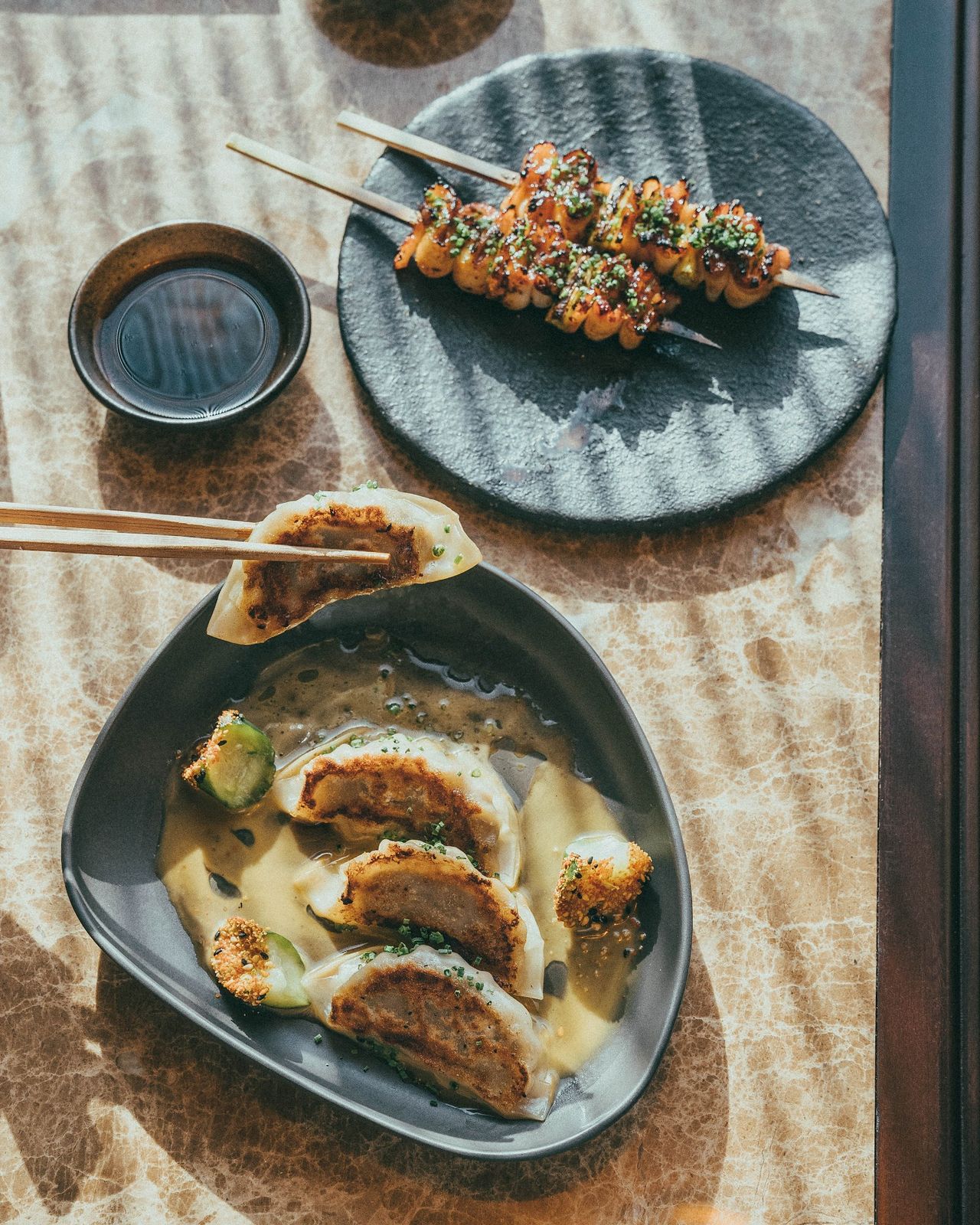
The glamour pick. Mimi Kakushi dresses its Four Seasons room in 1920s Osaka jazz-age style — velvet, brass, vintage prints — and backs the costume with real cooking: silken sashimi work, miso black cod that earns its ubiquity, and a counter omakase that distils the long menu into its best dozen moves. It's the loudest room in this guide and the right answer when the occasion wants atmosphere with its otoro. Licensed, with the same ask-and-they'll-adjust kitchen culture as its tier-mates.
What to order the counter omakase (around AED 500–800 by appetite) or, à la carte, the miso black cod (about AED 230).
Best for: date nights, birthdays, diners who want their omakase with a soundtrack.
Insider tip: the counter sits clear of the DJ's gravity — it's both the best food seat and the quietest one in the house.
The detail most guides skip: traditional sushi rice is seasoned with rice vinegar (fine), but glazes, cures and some soy blends can involve mirin or sake. At alcohol-free rooms like Moonrise and 3Fils, ask anyway — kitchens vary in how they build sauces, and both will tell you exactly. The phrase that works everywhere: "no cooking alcohol in any course, please" — said at booking, repeated at the counter. No serious chef in this city blinks at it.
Where halal omakase goes next
Five years ago this list would have had two entries. The direction of travel is unmistakable: Dubai's chefs have realised that the Gulf's most devoted fine-dining audience wants the counter ritual on its own terms, and the alcohol-free tier now leads the category in creativity rather than trailing it. For the broader counter landscape — licensed and otherwise — our complete Dubai omakase guide ranks every serious room in the city, the Top 20 Japanese restaurants hub maps the cuisine beyond the counter, and the Japanese cuisine guide covers everything from ramen to robata. Counting dirhams instead? Omakaseya stars in our budget dining guide too, and JBR-based readers can start closer to home with the best Japanese in JBR.
Frequently Asked Questions
Is omakase in Dubai halal?
The raw materials almost always are — meat and chicken served in UAE-licensed restaurants are halal-sourced by regulation, and fish is inherently halal. The real questions are whether the venue serves alcohol and whether the kitchen uses mirin or sake in sauces and cures. The first tier of this guide covers counters with no alcohol service; for any counter, ask about cooking alcohol when you book — serious chefs answer precisely.
What is the best fully halal omakase in Dubai?
Moonrise — Chef Solemann Haddad's Michelin-starred, 15-seat rooftop chef's table in Satwa — pairs its Middle East-meets-Japan tasting menu with an alcohol-free beverage program built around crafted mocktails and teas. 3Fils at Jumeirah Fishing Harbour is the more casual benchmark; it serves no alcohol.
How much does omakase cost in Dubai?
The spread in 2026: Omakaseya's entry menus start around AED 199, 3Fils' private counter experience runs around AED 350–450, Moonrise sits in the AED 700–900 band, and the luxury tier — TakaHisa, Hōseki — climbs past AED 1,000 per person.
Do I need to book Dubai omakase counters far ahead?
Yes for the small rooms: Moonrise's 15 seats and Hōseki's nine release weeks ahead and vanish. 3Fils' main room takes walk-ins at quieter hours, but its 10-seat counter books out. Weeknight first seatings are always the easiest door.
Counter seats vanish fast in this city — new omakase openings land in The Dubai Fork before the booking lines open.