Some Dubai restaurants measure success in bottle service; Kokoro Hand Roll Bar measures it in minutes before the fish runs out. Since chefs Daniel Lee and Patrick Pham opened the UAE's first dedicated hand roll bar in Alserkal Avenue in mid-2024, the routine has barely changed in 2026: doors at noon, Wednesday to Sunday, a queue of people who knew to come early, and a kitchen that simply stops when the day's fish is gone. On busy weekends that can mean mid-afternoon. There is no reservation book. There is barely a sign.
It is, by a comfortable margin, the most exciting thing to happen to casual Japanese food in this city — and at AED 25–50 a roll, among the most democratic. With nearly 3,100 Google reviews sitting at 4.8, the secret is long out; the technique is why it holds.
How Kokoro Hand Roll Bar Works (Read Before You Go)
The format rewards the prepared. You sit at the counter — that's the whole restaurant — and the chefs build each roll in front of you: warm seasoned rice, fish cut to order, crisp nori folded at the last second. The roll lands in your hand, not on a plate, and you have maybe ten seconds before the nori's crackle starts to soften. Eat immediately. This is not food for the table-photographer; it's the closest Dubai gets to the Los Angeles hand-roll-bar ritual that inspired it.
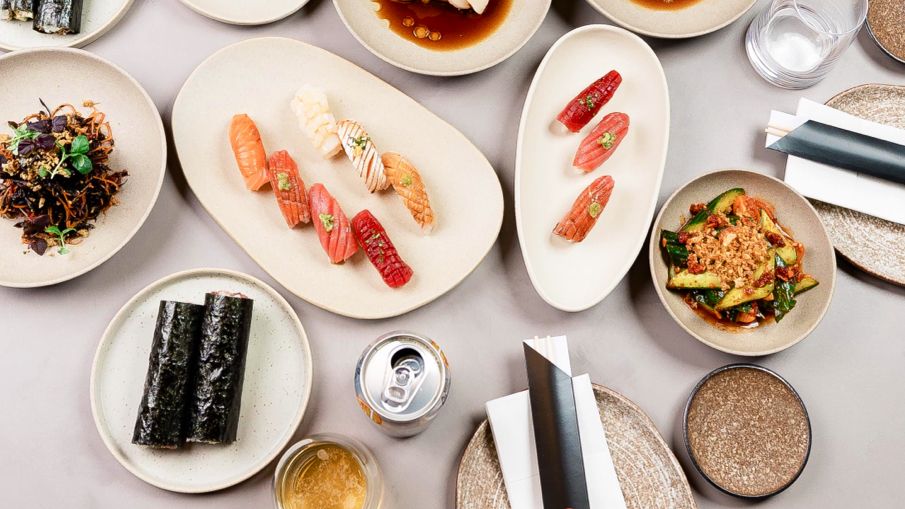
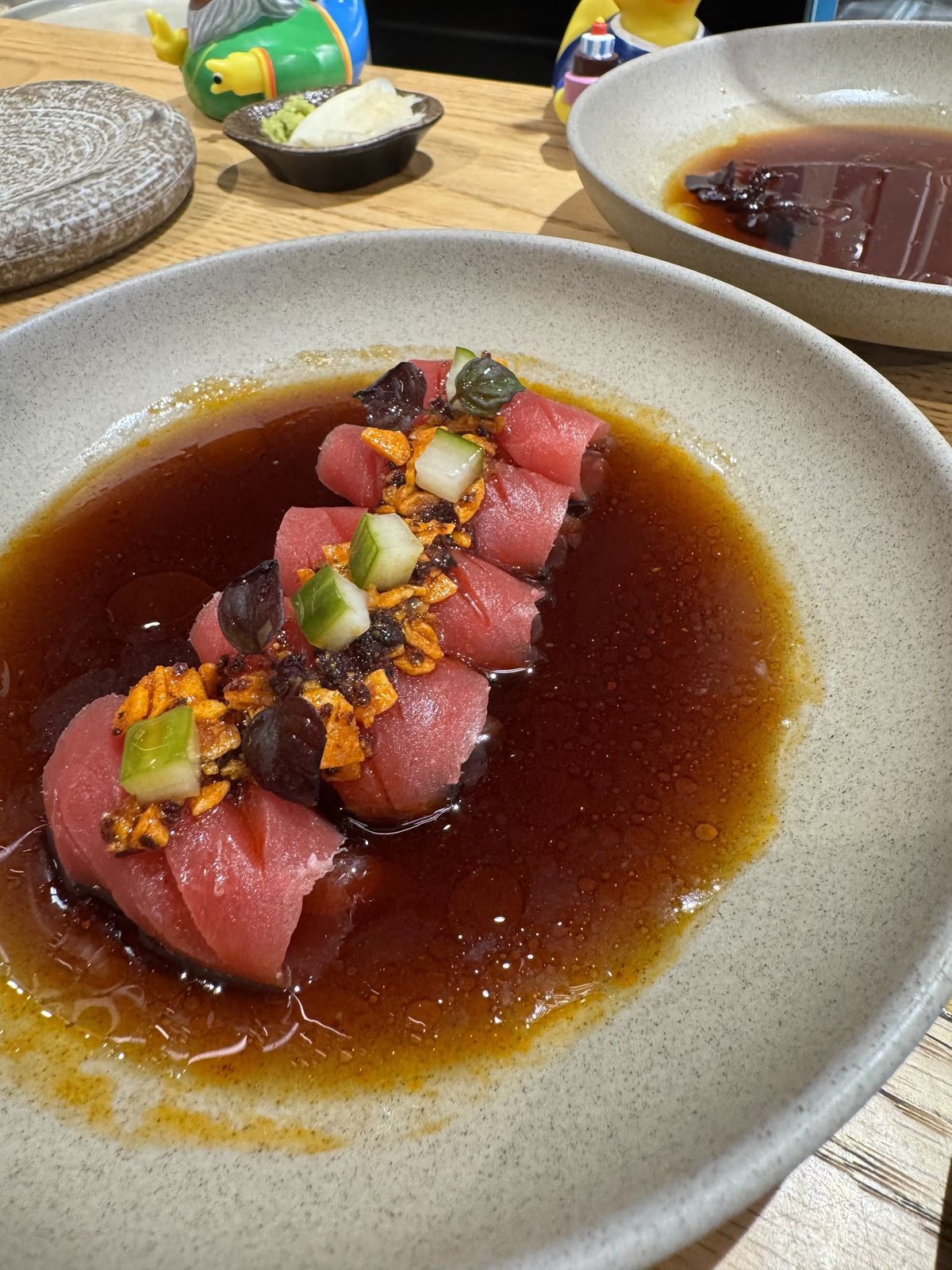
The menu runs eight hand rolls, ordered as sets of three, four or five — sets are the right call, building from lighter fish toward richer toro-and-truffle territory. Around the rolls sit crudo plates (AED 55–75) and nigiri and sashimi by the piece (AED 20–85), all from the same fish case you can see from your seat.
How to Order
- The 5-Roll Set rolls AED 25–50 each
The full arc of the menu's eight rolls. Trust the sequence the chefs suggest. - Crudo of the Day AED 55–75
Whatever's best in the case, dressed with restraint. Order one for the table while rolls are built. - Nigiri Add-Ons AED 20–85
Finish with two pieces of whatever the chef is proudest of that day. Just ask.
The Fish Is the Point — and It Shows
Everything at Kokoro is made fresh to order, and the difference between this and the city's grab-and-go sushi is structural, not cosmetic: rice at body temperature, nori that shatters, fish that was a whole loin an hour ago. On our Thursday visit in late May 2026 — counter seats at 12:40pm, after a 15-minute wait — the toro roll alone justified the drive to Al Quoz. A five-roll set, one crudo and tea came to AED 240 for one extremely happy person.
Context matters here: Dubai's Japanese scene skews theatrical, from DIFC's robata rooms to the AED 1,000+ counters in our omakase guide. Kokoro flips the equation — omakase-grade sourcing, street-food pricing, zero ceremony. It's the same logic that makes 99 Sushi Bar feel like the other bookend of the city's sushi spectrum.
Working Through the Eight Rolls
The menu's eight hand rolls read simply but sequence deliberately, and the sets are engineered around that arc. The opening rolls are the cleanest — fish, rice, nori, restraint — and they're where the kitchen's sourcing is most exposed; nothing hides a mediocre cut in a three-ingredient roll. The middle of the sequence introduces texture: tempura crunch, spicy preparations with actual heat rather than mayo-adjacent gestures. The closers are the rich ones — the toro end of the spectrum, where the AED 50 ceiling lives — and they're built to land like a dessert course, fat and warmth and that last crackle of nori.
Two ordering notes from repeat visits. First, the sets are priced as the sum of their rolls — you're not paying for the format, so build your own sequence if you know what you like; the chefs will re-order it sensibly anyway. Second, the daily specials chalked behind the counter are not an upsell trap. They're what came in that morning, and saying "yes" to whichever one the chef mentions first has never once gone wrong for us. The crudo section runs on the same principle: ask what's best, not what's listed.
Drinks stay simple — teas, Japanese sodas, a short list that respects the fact you're here for twenty-five minutes of concentrated eating, not a session. The whole meal moves at the speed of the chef's hands, which is the charm: a five-set lunch, ordered well, runs about half an hour seat to street.
What Kokoro Says About Dubai's Sushi Scene
Kokoro matters beyond its own counter because it broke a Dubai assumption: that serious Japanese food here must arrive wrapped in spectacle and a three-digit cover charge. The city's sushi spectrum had two poles — supermarket-grade convenience and DIFC theatre — with almost nothing between. Kokoro planted a flag in the middle: top-two-percent sourcing at neighbourhood-lunch pricing, made viable by ruthless focus. No tables to service, no thirty-dish menu, no third shift. Eight rolls, one counter, done when the fish is done.
The model has consequences you can feel. Because nothing is pre-rolled, there's no waste-driven markup baked into the price. Because the room is the counter, the chefs are also the quality control, the service, and the entertainment. And because it closes when it sells out rather than padding the case to survive a slow Tuesday, the worst fish you'll ever be served at Kokoro is this morning's. Two years in, the formula has already spawned imitators around the city — we keep tabs on them in the Japanese lunch guide — but the original still sets the bar, roll for roll.
When to Go to Kokoro (Timing Is Everything)
Noon, on the dot, Wednesday through Friday — you'll walk straight to a seat. Saturday and Sunday build a queue by 12:30 and the wait can hit 45 minutes at peak; solo diners get slotted in fastest. Going after 2:30pm on a weekend is gambling against the fish case. The move locals have settled on: gallery loop around Alserkal Avenue first, counter seats when doors open, coffee in the Avenue after. It's the best cheap-ish lunch itinerary in the district — and one of several reasons Al Quoz keeps topping our hidden gems of Al Quoz list.
Queue Culture and Counter Etiquette
Because there's no host stand and no app, the queue runs on unwritten rules worth knowing. The line forms outside the door; parties are seated strictly in order, but solo diners and pairs leapfrog larger groups when single seats open — which is why going alone is the power move here. Once you're seated, the pace is yours to keep: the chefs read your eating speed and build the next roll accordingly, so lingering over your phone literally slows your own lunch. Phones, incidentally, get one photo's worth of tolerance; the ten-second rule means the chefs visibly wince at a roll dying on camera while its nori softens.
A few more counter notes from accumulated visits. Don't ask for soy and wasabi adjustments before tasting — the rolls come seasoned, and the kitchen's balance is the product. Do talk to the chefs; quiet moments get you provenance stories (which fish came in that morning, why the rice blend changed) that double as a free masterclass. And when the "sold out" sign goes up while you're mid-set, your order is safe — the cut-off applies to the door, not the counter. Tipping isn't expected but the jar exists, and after watching two people hand-build your entire lunch from a metre away, you'll understand why it's rarely empty.
If the queue defeats you, the consolation strategy is a loop through the Avenue's galleries and a return at the shoulder hour around 2pm on weekdays — risky on weekends, reliable midweek. What you shouldn't do is settle for takeaway: hand rolls are architecture with a ten-second lifespan, and a boxed Kokoro roll is a souvenir of a meal rather than the meal itself.
Pros
- Best-value serious sushi in Dubai (rolls from AED 25)
- Made-to-order, eaten-in-seconds format
- Chefs cook in front of you, every roll
- Alserkal setting — galleries before, coffee after
- 4.8 from 3,000+ reviewers, deservedly
Things to Know
- No reservations, period
- Sells out — weekend afternoons are risky
- Counter-only; not a group venue
- Wed–Sun only
The Verdict on Kokoro Hand Roll Bar
Final Verdict
The most honest sushi operation in Dubai. No room, no reservations, no theatre — just eight rolls, perfect rice, and fish that runs out because it was never going to be compromised. Arrive at noon, order the five-set, eat each roll in ten seconds. The AED 25 entry price embarrasses half the city's omakase menus.
/ 10
Plan Your Visit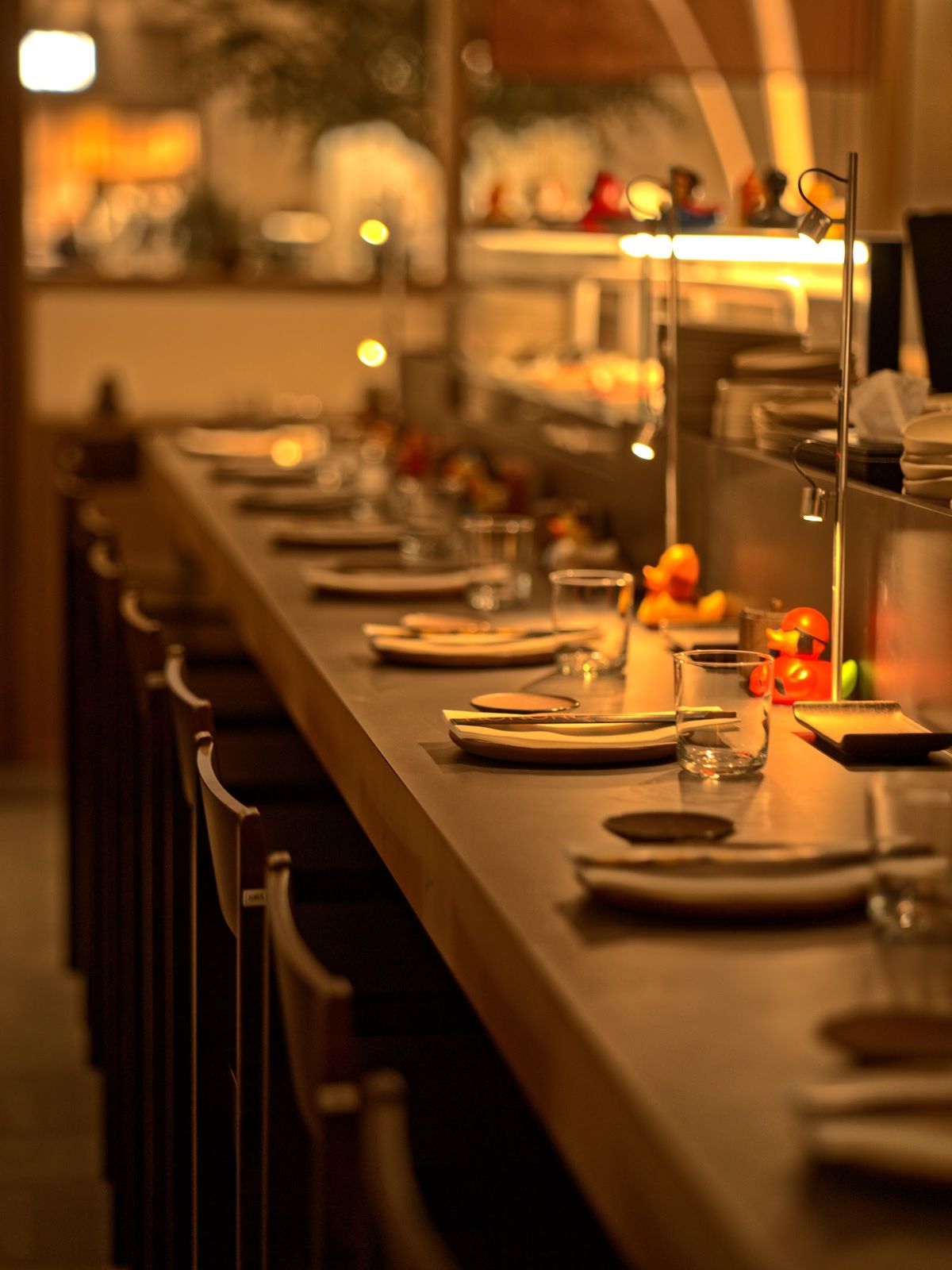
More Japanese intel: the full Japanese cuisine hub maps the whole scene, the top 20 Japanese restaurants in Dubai ranks the heavyweights, and if Kokoro's pricing is what drew you in, our budget dining guide and Al Quoz cheap eats run the same playbook across the city.
Kokoro Hand Roll Bar — FAQs
Does Kokoro take reservations?
No — counter seats are first come, first served. Arrive at noon; weekend peak waits run to 45 minutes.
How much does it cost?
Hand rolls AED 25–50 (sets of 3/4/5), crudo AED 55–75, nigiri and sashimi AED 20–85. Around AED 100–150 for a satisfying lunch.
What are the hours?
Wednesday–Sunday from noon until the fish sells out — sometimes mid-afternoon on weekends.
Who's behind it?
Chefs Daniel Lee and Patrick Pham, who opened the UAE's first dedicated hand roll bar here in mid-2024.
Where is it exactly?
Inside Alserkal Avenue, off 17th Street in Al Quoz. Park in the Avenue and follow the queue.