Emirati food is one of the great undiscovered cuisines of the Middle East. Unlike Lebanese or Turkish cooking — which have spread globally — Emirati food has remained almost entirely within the UAE, cooked in home kitchens, passed down through family recipe cards, and served in a tiny handful of restaurants that know what they're doing. Visiting Dubai without eating properly Emirati food is like going to Tokyo and skipping sushi. The city is the context; the food is the story.
These 15 dishes span the full range of Emirati cooking: Bedouin slow-cooking, Gulf seafood traditions, ancient preservation techniques, and the extraordinary sweet-savoury dualism that runs through breakfast culture like a golden thread. We've included where to find each dish and what to expect to pay.
The Mains: Rice, Meat & Seafood
The backbone of Emirati cuisine — dishes of real substance and spice depth
Machboos (المچبوس)
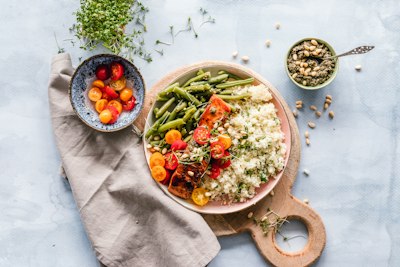
The national dish of the UAE. Long-grain rice slow-cooked with meat or fish, dried limes (loomi), and the bezar spice blend — a proprietary family mixture of cumin, coriander, cinnamon, and turmeric that varies by household. The rice absorbs the meat juices and emerges deeply golden and fragrant. The best versions include caramelised onions and slow-braised lamb that falls apart at the touch. Order machboos laham (lamb) at Al Fanar; machboos dajaj (chicken) at Logma.
Al Harees (الهريس)
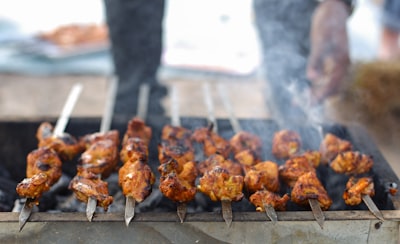
One of the oldest dishes in the Arab world — wheat and meat slow-cooked together for hours, then pounded to a smooth, silky porridge. Sounds deceptively simple; tastes impossibly complex. The wheat and meat merge into something transcendent, finished with a pool of clarified butter and a dusting of cinnamon. Harees is Ramadan food, wedding food, celebration food — it carries centuries of communal meaning. If you only eat one Emirati dish, make it this.
Samak Mashwi (سمك مشوي)
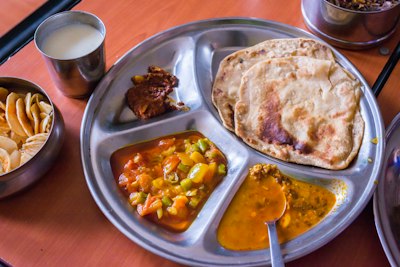
Grilled Gulf fish — most commonly hammour (grouper) or safi (rabbitfish) — rubbed with a paste of lemon, garlic, cumin, and turmeric, then cooked over coals until the skin crisps and blackens at the edges. Served with rice, sliced tomatoes, and a fiercely acidic lime pickle called ambah. This is the simplest Emirati dish and possibly the most perfect. The Gulf produces extraordinarily sweet, firm fish; the spice paste respects it completely.

Ouzi (أوزي)
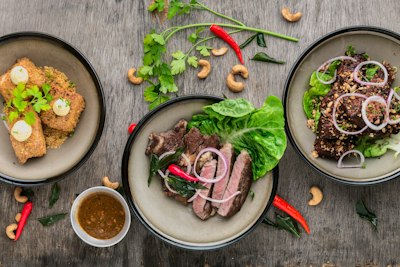
Whole slow-roasted lamb — marinated for 24 hours in yoghurt and spices, then cooked in a sealed clay pot buried in hot coals or a low oven for eight to ten hours. The result is meat so tender it collapses at the touch, infused with the fragrance of cardamom, saffron, and rosewater. Served over a mountain of saffron rice with fried onions and nuts scattered across the top. Order in advance (24 hours); a full ouzi feeds 4–6 people generously.
Jisheesh (جشيش)
Cracked wheat slow-cooked with chicken or lamb in a deeply spiced broth — lighter than harees but equally ancient, and equally comforting. Jisheesh is Ramadan food at its most elemental: a dish that feeds crowds economically while delivering extraordinary flavour. The texture sits between risotto and porridge. Some versions add tomato and onion; others keep it bare and brothlike. A benchmark test for any Emirati restaurant's kitchen.
Breads & Small Plates
The extraordinary bread culture of Emirati cooking — flatbreads, stuffed pastries, crispy layers
Khameer (خمير)
The great Emirati breakfast bread — a leavened flatbread enriched with saffron and sometimes sweetened with dates, baked in a traditional oven until the surface blisters and caramelises. The name simply means "yeast bread" but the result is far more interesting than the description suggests: springy, slightly tangy, with a perfume that fills the room. Served with date syrup, honey, or cream cheese. Logma's version, baked fresh each morning, is sold out by 10am most days.
Regag (رقاق)
Paper-thin crispy flatbread cooked on a circular iron griddle — one of the most astonishing Emirati cooking demonstrations you can watch. The batter is spread across the hot surface in a single motion and cooked for under a minute; the result is a gossamer-thin cracker with irregular burnt edges and extraordinary crunch. Served with eggs and cheese (regag bil bayd wa jibn), honey, or date syrup. The making is as spectacular as the eating.
Sweets & Desserts
Emirati desserts are built on dates, saffron, rosewater, and deep-fried joy
Luqaimat (لقيمات)
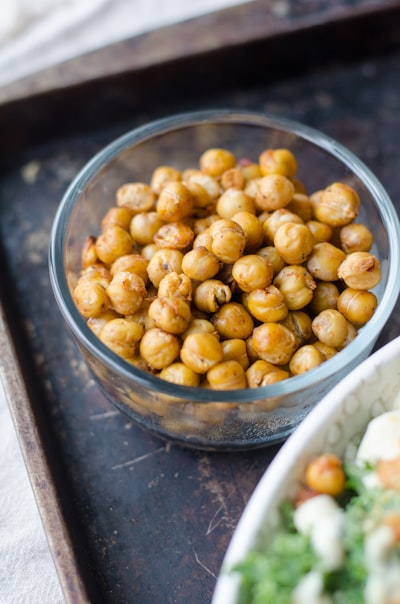
Crispy fried dumplings the size of golf balls — golden outside, pillowy inside, drizzled with date syrup and scattered with sesame seeds. Dubai's most beloved street food and the dessert that best captures Emirati food culture: democratic, immediate, addictive, impossible to eat just three. Luqaimat sellers appear across the city during Ramadan, frying to order in enormous vats. Year-round you'll find them at Al Fanar, Logma, and Arabian Tea House. Budget AED 18–35 for a portion.
Balaleet (بلاليط)
The most confounding and rewarding dish in Emirati cuisine: sweet, saffron-and-rosewater-scented vermicelli topped with a fried egg. The combination of sweet noodles and savoury egg sounds wrong and tastes completely right. It is eaten for breakfast and appears on every serious Emirati breakfast table in the city. The key is temperature — the noodles should be warm, the egg just set. Al Fanar's version (AED 52) is the benchmark. Order it once and you'll order it every time.
Chebab (چباب)
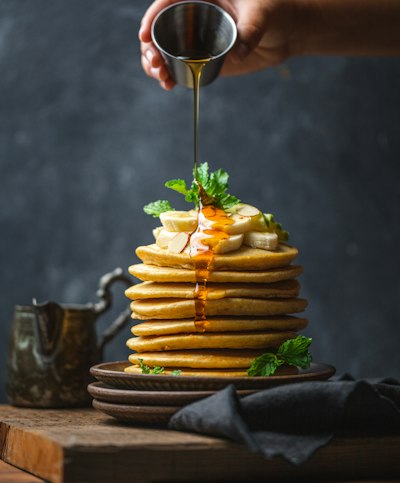
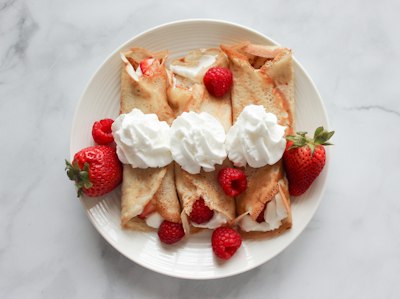
Saffron-yellow Emirati pancakes — thinner than American pancakes, more fragrant, and typically eaten with date syrup, fresh cream, or cheese. Logma's modern version with Nutella and date cream (AED 42) is one of the great casual dishes in Dubai — a beautiful update of a traditional form. The traditional version with just date syrup and butter is available at Arabic Tea House and remains quietly perfect.
Drinks & the Emirati Coffee Ceremony
Hospitality in Emirati culture is inseparable from its drinks tradition
Gahwa (قهوة)
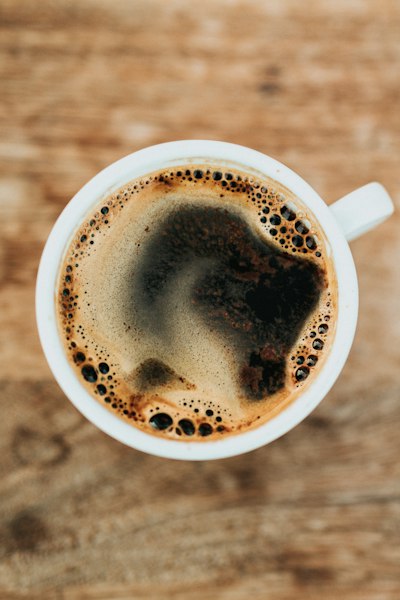
Emirati Arabic coffee — a pale, unsweetened brew of lightly roasted beans infused with cardamom, saffron, and rosewater. Served in tiny handleless cups (finjan) that you hold with both hands as a mark of respect. Gahwa is not coffee as the world understands it; it is ceremony, hospitality, and a 500-year-old social ritual poured into a small cup. Always drunk with a date. Never refused. The correct response when your cup is full: rock it gently back and forth to indicate you're done.
Karak Chai (شاي كرك)
The most democratising drink in Dubai — consumed equally by Emiratis, South Asians, and every other nationality in the city. Karak is a strong, sweet, condensed-milk tea spiced with cardamom and ginger, simmered until it takes on a caramel character. It's technically of Indian origin but has been entirely adopted into Emirati daily life. The best versions are made fresh to order in karak shops across Deira and Bur Dubai, served in small paper cups for AED 2–4.
The Ramadan Specials
Dishes that appear only (or primarily) during the Holy Month
Firni (فيرني)
Emirati rice pudding — ground rice slow-cooked in full-fat milk with saffron and rosewater, chilled and topped with crushed pistachios and a thread of date syrup. Similar to Iranian fereni, with which it shares historical roots. Served cold after iftar, firni is one of the most delicately beautiful Emirati desserts: pale gold, impossibly silky, perfumed with a subtlety that shames every heavy Western pudding. Available year-round at Aseelah; primarily a Ramadan dish elsewhere.
Tamer — Premium Emirati Dates (تمر)
No guide to Emirati food is complete without dates — the cornerstone of the cuisine and the first thing placed before any guest in any Emirati home. Emirati date culture is sophisticated to a degree visitors rarely appreciate: there are over 40 commercially important date varieties in the UAE alone, ranging from the pale Lulu to the deep amber Khalas, each with distinct flavour profiles and optimal eating seasons. The finest dates in Dubai are sold at the Deira Date Souk and at premium date shops throughout the city. Budget AED 50–200 per kilogram for quality varieties.

Aseeda (عصيدة)
A thick, sweet Emirati porridge made from wheat flour, saffron, and clarified butter — one of the oldest breakfast dishes in the Gulf, eaten by pearl divers and Bedouin travellers for centuries before anyone called it heritage food. The texture is between polenta and pudding; the flavour is simple, warming, and deeply satisfying at 5am before a long day. Not a restaurant dish in the strict sense — aseeda appears primarily at home tables, at SMCCU cultural meals, and at Ramadan community iftars. When you find it, order it twice.

Emirati Dishes FAQ
What is the most famous Emirati dish?
Machboos — spiced rice with slow-cooked meat and dried limes — is universally considered the UAE's national dish. Al harees runs a close second for ceremonial and cultural significance.
What should I absolutely not miss in Emirati food?
If you only eat three Emirati dishes, make them: machboos (to understand the spice culture), harees (to understand the slow-cooking tradition), and luqaimat (because they are simply irresistible).
Is Emirati food very different from other Arabic cuisines?
Yes, significantly. Emirati food is more influenced by Indian Ocean trade (more spice, more dried lime, more saffron) than Levantine Arabic cooking. It shares some dishes with Saudi and Yemeni cuisines but has a distinctive identity shaped by the Gulf sea and the Arabian desert.