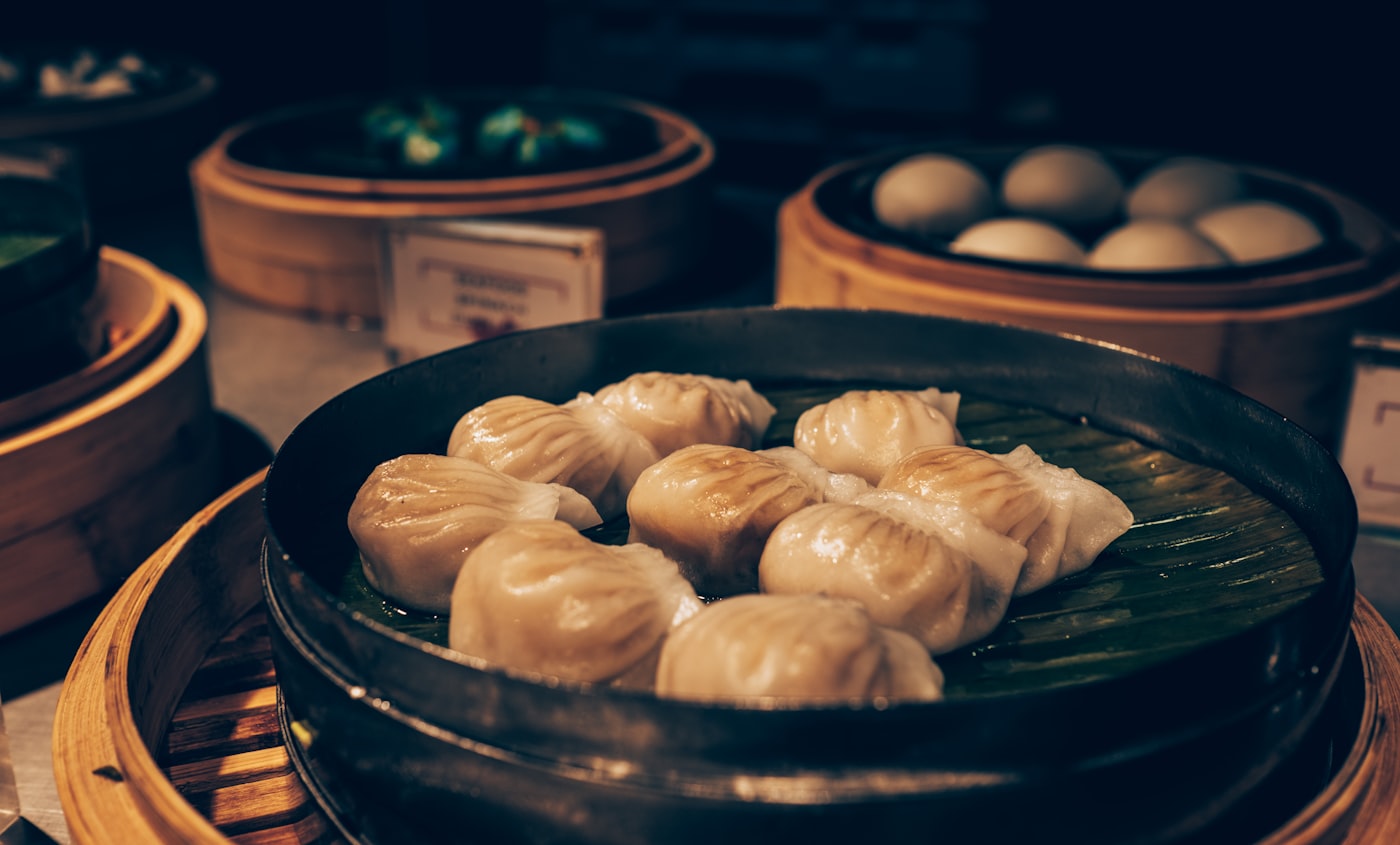
Khinkali is Georgia's answer to the question: what if a dumpling contained an entire bowl of soup? These giant, pleated parcels — always with a distinctive twisted knot on top — are hand-folded around a juicy filling that releases a cascade of hot, spiced broth when you bite into them. They are one of the great joys of Georgian cuisine and, in Dubai, they are having a well-deserved moment.
There is an art to eating khinkali correctly, a specific filling hierarchy to understand, and — as we've discovered through dedicated research — a significant quality gap between the best and worst versions in Dubai. This guide covers everything.

Khinkali Fillings — What to Order
Traditional khinkali has strict rules: the filling must be loose enough to create broth inside the dumpling during steaming. This is not an accident — the broth is the entire point. Here are the main fillings you'll encounter in Dubai:
Kalakuri (Spiced Meat)
The original — minced lamb and pork with raw onion, chilli, coriander and black pepper. The juiciest filling, maximum broth. Order these first every time.
Sokos (Wild Mushroom)
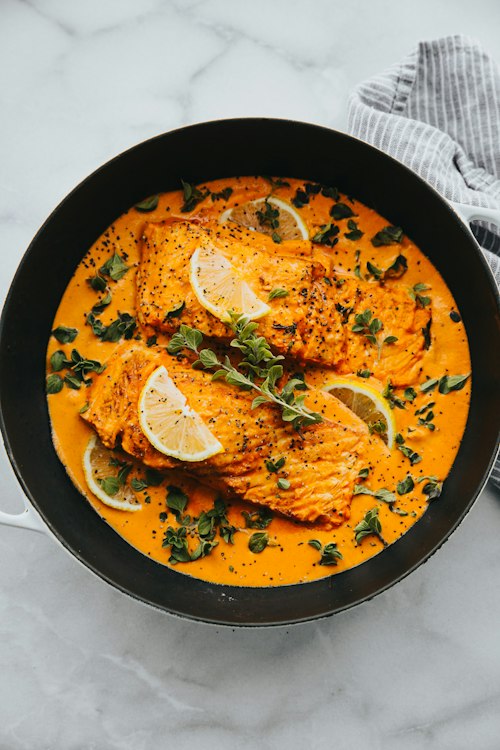
Porcini or mixed wild mushroom with herbs and butter. The vegetarian alternative that rivals the meat version for broth intensity. Earthy and deeply satisfying.
Kveli (Suluguni Cheese)
Suluguni cheese with herbs — no broth (cheese doesn't produce liquid the same way), but a different pleasure entirely. Stretchy, salty, satisfying. Best ordered alongside meat versions.
Kartopili (Potato)
Mashed potato with butter and fried onions — a Svan mountain variant. No broth, pure comfort food. Good for khinkali-sceptics as an entry point. More filling, less drama.
Pure Lamb
Lamb-only version (no pork) — available at halal-certified Georgian restaurants in Dubai. Same spice profile as kalakuri but lighter, with excellent broth. Ask specifically for the halal khinkali.
Chanakhi (Seasonal)
Seasonal fillings vary — spring khinkali with nettles and herbs, autumn versions with pumpkin. Not always available but worth asking about. The ultimate expression of Georgian seasonal cooking.

How to Eat Khinkali — The Right Way
Khinkali has its own etiquette that Georgians take seriously. Getting it right is not just polite — it dramatically improves the eating experience.
Pick it up by the knot
Hold the twisted top (the "hat" or kudi) with your thumb and index finger. Never use a fork or knife — it will puncture the dumpling and you'll lose the precious broth. Khinkali is always eaten with hands.
Bite a small hole in the side
At the bottom of the dumpling (opposite the knot), take a small bite. This creates an opening to drink through. The filling is very hot — the broth can be scalding. Be careful.
Drink the broth first
Tilt the dumpling and drink the hot broth through the hole you've made. This is non-negotiable. Georgians consider losing the broth to be a genuine tragedy — it's the soul of the khinkali.
Eat the dumpling
Once the broth is consumed, eat the rest of the dumpling in one or two bites. Sprinkle with black pepper before eating — Georgian restaurants always provide a pepper grinder for khinkali.
Leave the knot on the plate
The kudi (twisted knot) is traditionally left uneaten — it was the part held by hands and is also thicker dough. Count your empty knots at the end of the meal. Georgians count them as a point of pride. Twenty is respectable. Thirty is legendary.
Best Khinkali in Dubai — Top Venues Ranked

Tbilisi Restaurant & Bar
The best khinkali in Dubai without question. The hand-folded technique produces a proper knot with 18–22 pleats (the traditional minimum is 18 — fewer indicates factory production). The kalakuri meat filling is juicy and perfectly spiced with just enough chilli heat. The mushroom version is extraordinary — wild porcini broth with a truffle-like intensity. Six fillings available. Order a minimum of two per filling to properly compare. Late-night khinkali at Tbilisi, around midnight when the CIS expat crowd arrives, is one of Dubai's great food experiences.
Mimino Georgian Kitchen
Mimino's khinkali punches well above its price point. Six filling options, all made in-house daily with decent pleating technique. The star here is actually the suluguni cheese khinkali — unusually good, with a proper stretch when you bite in. The kartopili (potato) version is the best in Dubai for comfort-food mood. Prices are the most accessible of any quality Georgian restaurant.
Sakartvelo
Sakartvelo's khinkali is the most refined version in Dubai — slightly smaller than the Tbilisi giant portions, but with more carefully controlled seasoning and excellent dough texture. The chanakhi (seasonal) khinkali here is the only place in Dubai to reliably find unusual fillings — nettle in spring, pumpkin in autumn, herb-and-walnut combinations in summer. Worth the premium price.
Khinkali Price Guide — Dubai 2026
| Venue | Area | Price/piece | Quality | Best Filling |
|---|---|---|---|---|
| Tbilisi Restaurant & Bar | JLT | AED 6–8 | ⭐⭐⭐⭐⭐ | Kalakuri meat, mushroom |
| Sakartvelo | Business Bay | AED 7–9 | ⭐⭐⭐⭐⭐ | Seasonal, kalakuri |
| Mimino Georgian Kitchen | Jumeirah | AED 5–7 | ⭐⭐⭐⭐ | Cheese, potato |
| Gori Kitchen | JLT | AED 5–6 | ⭐⭐⭐⭐ | Meat, mushroom |
| Rustavi Georgian Café | Deira | AED 4–5 | ⭐⭐⭐ | Meat |
| Tbilisi Bakery & Deli | Al Karama | AED 4–5 | ⭐⭐⭐ | Meat, cheese |

Khinkali Dubai — FAQ
Are khinkali halal in Dubai?
Traditional kalakuri khinkali use a mix of lamb and pork. Most Dubai Georgian restaurants offer a halal lamb-only version — ask specifically for "halal khinkali" or "lamb khinkali" and confirm with staff. Mushroom, cheese, and potato versions are naturally pork-free.
How many khinkali should I order per person?
As a starter: 3–4 per person. As a main course: 6–8 per person. Georgians typically eat 8–12 at a sitting, with khachapuri on the side. Don't underorder — they're addictive and you will want more.
What's the difference between khinkali and Chinese soup dumplings (xiao long bao)?
Both contain broth inside the dumpling skin. Key differences: khinkali are much larger (typically 80–120g each vs 15–20g for XLB), the dough is thicker and chewier, the filling is spiced differently (coriander, black pepper, chilli rather than ginger and soy), and the eating technique differs (held by the knot vs chopsticks). They evolved independently in separate food cultures.
Can you get khinkali delivery in Dubai?
Several Georgian restaurants deliver via Talabat and Deliveroo. Unlike xiao long bao, khinkali travel reasonably well in delivery — the thicker dough holds the broth better. Tbilisi Restaurant and Mimino both have delivery options. Still best eaten immediately.
Why do you leave the knot uneaten?
Two reasons: practical (the knot was handled with hands) and textural (the thick dough knot is less pleasant to eat than the rest of the dumpling). Georgian custom counts the empty knots as a record of how much you ate. Eating the knot is considered provincial by some Georgians — a debate that has been going on for centuries.