Step off the metro at BurJuman and walk south for five minutes. The streets narrow, the signage switches to Hindi and Urdu, the air fills with the scent of cardamom and fenugreek and frying onions, and the noise level rises. You've arrived in Meena Bazaar — Dubai's original South Asian food district and, for our money, one of the most exciting neighbourhoods in which to eat in the entire city.
Meena Bazaar takes its name from the Meena Bazar textile market that has occupied this stretch of Bur Dubai since the 1960s. But the shopping is almost incidental to the eating. What you come here for is the dhabas — the no-frills curry houses with plastic tables, hand-written menus and food that would cost six times as much in Marina or Downtown. You come for the street snack stalls, the mithai shops stacked with barfi and gulab jamun, the sugarcane juice stands, and the biryani restaurants where the pot is sealed with dough and opened at your table.
The street snack scene peaks between 4pm and 8pm when vendors set up their carts. For curry houses and sit-down restaurants, lunch (noon–2pm) and dinner (7pm–10pm) are peak times. The whole area transforms beautifully during Ramadan after Iftar.
What You Need to Know About Eating in Meena Bazaar
A few things that separate confident Meena Bazaar eaters from first-timers. Most of the best places are walk-in only — no reservations, no fuss, you just show up and take a table. Many prefer cash, though cards are increasingly accepted. The portions are enormous and designed for sharing. If you're visiting as a couple, order three dishes and you'll still leave wondering how to fit in the dessert.
The cuisine is predominantly North Indian and Pakistani — rich curries, tandoor-cooked breads and meats, biryani cooked in a sealed pot, and daal prepared with the kind of patience that's only possible when flavour, not speed, is the priority. The Sri Lankan and South Indian places are fewer but excellent — look for the kottu roti stalls where the rhythmic chopping of steel blades is both soundtrack and advertisement.

The Best Restaurants in Meena Bazaar
Sind Punjab Restaurant
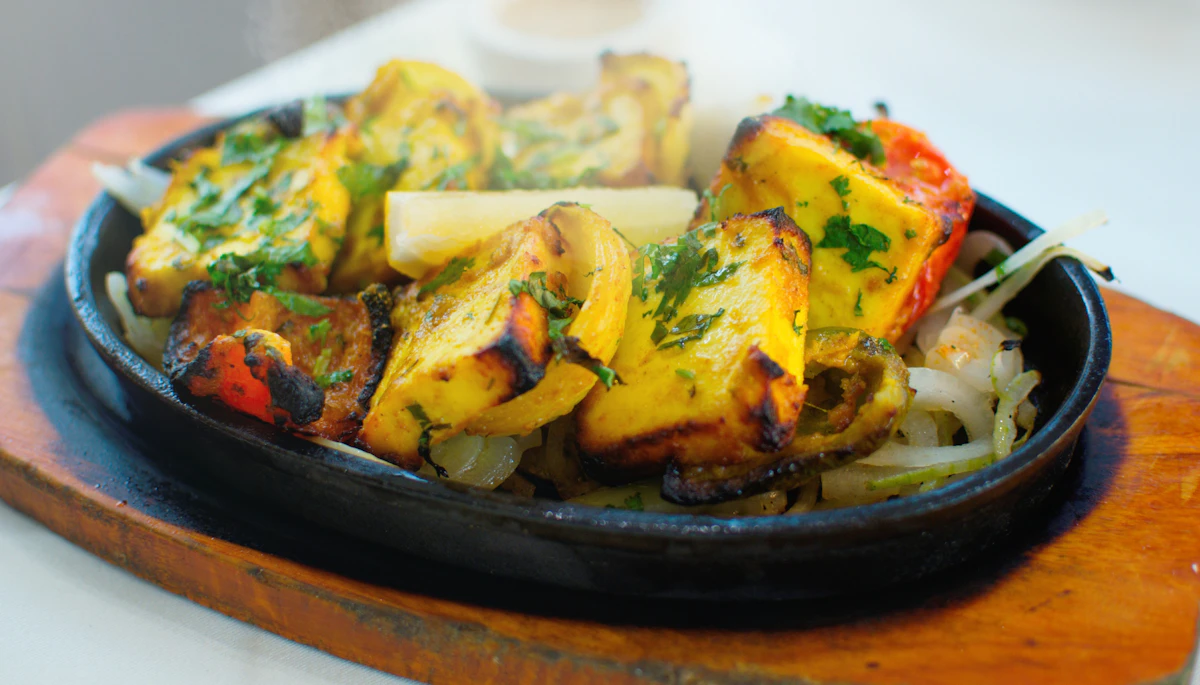
The undisputed king of Meena Bazaar. Sind Punjab has been serving the same mutton karahi since before most Dubai residents were born, and the formula doesn't need changing. The karahi — mutton slow-cooked in a blackened iron wok with fresh tomatoes, green chillies, ginger and a specific blend of whole spices that the family guards fiercely — is a dish that justifies the trip to Bur Dubai on its own. Order the seekh kebabs, the 24-hour dal makhani and fresh-made naan. Pay less than AED 50 for two people. Leave extremely happy.
Must order: Mutton karahi, seekh kebab platter, dal makhani, garlic naan. Skip: the chicken dishes — the restaurant's soul is in the mutton.

Bombay Chowpatty
The most authentic recreation of Mumbai's famous Chowpatty Beach snack culture in Dubai. Pani puri with chilled tamarind and mint water, bhel puri tossed to order, pav bhaji with a lake of butter, and vada pav (the Mumbai burger) that regulars cross town for. The name refers to the famous Mumbai beach — the food lives up to the provenance.

Hyderabad Dum Biryani
The most focused biryani restaurant in Meena Bazaar — the pot is sealed with dough and cooked over a slow flame for two hours. When it's opened at your table, the steam carries the scent of whole spices, saffron and caramelised onion. The lamb dum biryani is the standard order. The mirchi ka salan (green chilli curry served alongside) is not optional.

Saravana Bhavan
The legendary Chennai vegetarian chain operates one of its best Dubai branches in the Bur Dubai area. The masala dosa — rice crepe filled with spiced potato, served with coconut chutney and sambar — is the benchmark dish. The unlimited South Indian thali set (AED 30) is one of the best value meals in Dubai. Filter coffee served in a traditional stainless steel tumbler.
The Street Food & Snack Scene
The best eating in Meena Bazaar doesn't happen inside restaurants. Walk the narrow streets between 4pm and 8pm and you'll find a rotating cast of street vendors setting up carts, frying snacks and serving fresh juice from wheeled sugarcane presses.
Pani Puri
Crispy semolina spheres filled with spiced chickpeas and dunked in ice-cold tamarind and mint water. The universal language of South Asian snacking.
AED 5–10 for a plate of 6Seekh Kebab Rolls
Spiced minced lamb grilled on charcoal skewers, wrapped in a paratha with onion rings and green chutney. Sold from carts and tiny kitchens everywhere.
AED 5–8 per rollSugarcane Juice
Pressed fresh with ginger and lemon from ancient-looking machines. The perfect antidote to spicy food. You'll see the green stalks stacked outside.
AED 5–8 per glassMithai (Indian Sweets)
The mithai shops sell barfi (milk fudge), gulab jamun (fried dough in syrup), jalebi (fried spirals in sugar syrup) and dozens of other sweets. Buy by weight.
AED 20–40 per 250gVada Pav
The Mumbai working-class burger — spiced potato fritter in a soft bread roll with green chutney and garlic chutney. Simple, perfect, unstoppable.
AED 3–5 per pieceHaleem
Slow-cooked wheat and meat stew — one of the great Pakistani/Hyderabadi dishes. Found in a few specialist shops in the bazaar, especially during Ramadan.
AED 15–25 per bowlThe mithai (sweet) shops of Meena Bazaar are some of the most genuinely Indian places in Dubai — glass cases filled with barfi, ladoo, peda and seasonal sweets. The best are on the main bazaar street. Buy 200g of mixed sweets for under AED 15 and you'll understand why these places have zero marketing budgets and still have queues.
The Meena Bazaar Food Walk
🌶️ The Meena Bazaar Food Route
Essential Dishes to Order in Meena Bazaar
The Must-Order List

The Dubai Fork
Weekly: new openings, hidden gems and the best food news from Bur Dubai and beyond.
⚡ Hidden gems delivered before they go viral — join 12,000+ Dubai food lovers.
More Bur Dubai Guides