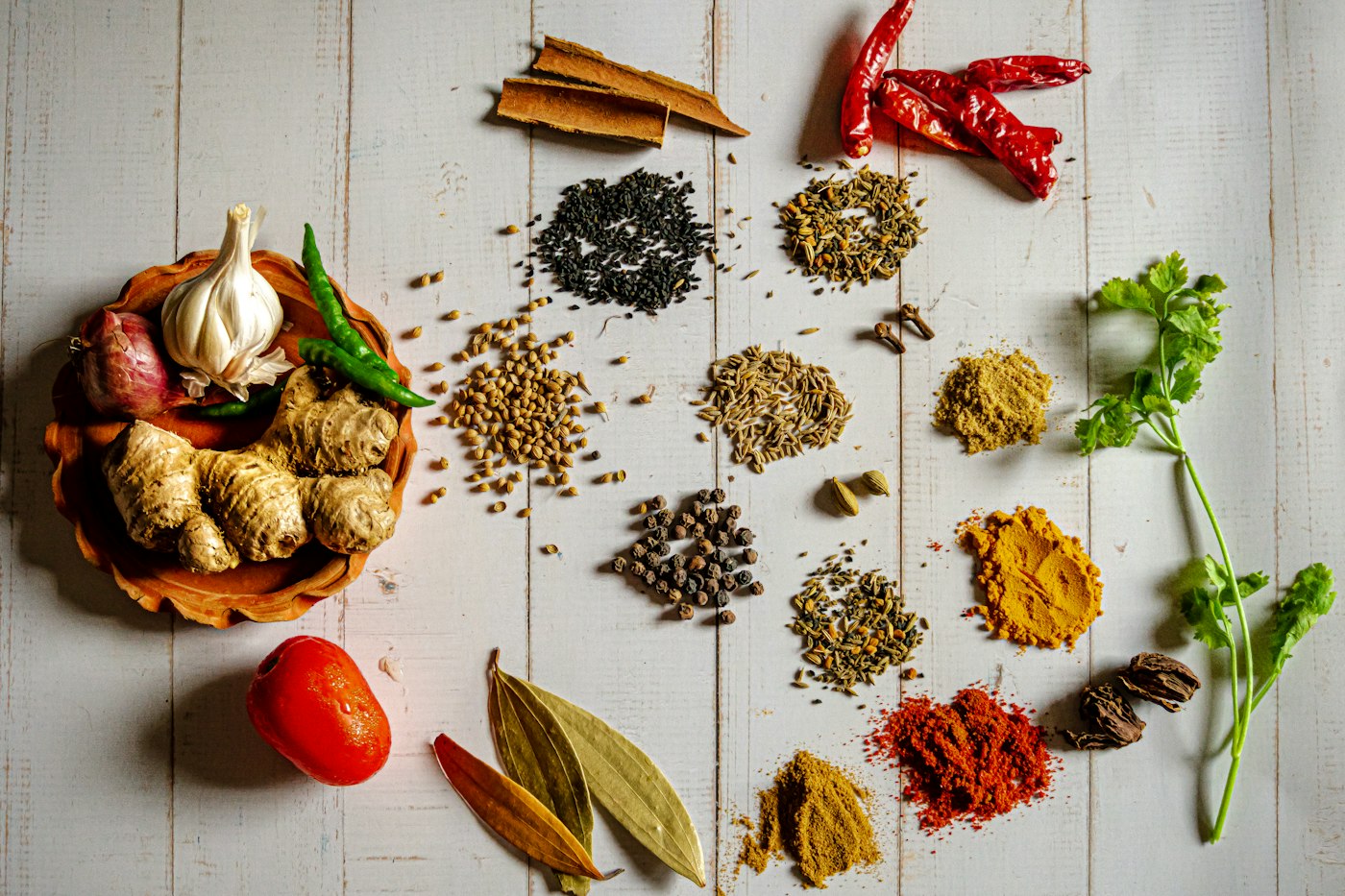
Dubai sits at the crossroads of the ancient spice trade — and the city's spice markets reflect this history with extraordinary depth. The Deira Spice Souk is the most famous destination, but serious cooks and food explorers know that the best Silk Road ingredients are scattered across several markets and specialist shops throughout the city.
This guide covers everything you need to cook authentic Central Asian food at home in Dubai — or to understand what you're eating when you sit down at a Kazakh, Uzbek, Kyrgyz or Tajik restaurant. From cumin and black cumin (nigella) to dried barberries and zereshk, from Uzbek dried apricots to Tajik pomegranate molasses — Dubai is one of the best cities on earth to source these ingredients.
The Essential Silk Road Spice Pantry
Central Asian cooking relies on a relatively short but specific list of spices. Get these right, and you can replicate the fundamental flavours of the Silk Road at home.
Zira (Cumin)
The defining spice of Central Asian food. Uzbek zira (from the Fergana Valley) has a more intense, earthy flavour than regular Indian cumin. Available whole or ground. Used in every plov.
Barberries (Zereshk)
Dried tart red berries that add sourness and colour to plov and rice dishes. A defining flavour of Uzbek and Persian rice. Look for plump, vivid-red berries — avoid old, dark-coloured ones.

Sumac
Ground dried sumac berries — tangy, fruity, deep burgundy-red. Used as a finishing spice on shashlik, in salads, and with meat dishes. Lebanese and Central Asian variants both available; the Lebanese is finer-ground.
Coriander Seed
Used whole in plov and braised dishes. Uzbek coriander seeds tend to be roasted slightly differently than those from South Asia — look for Central Asian suppliers in Deira for the authentic flavour.
Saffron (Zafaron)
Used in Tajik and Iranian plov, rice dishes, and teas. Iranian and Afghan saffron are the most common in Dubai. Buy from reputable sellers — test by steeping a few threads in warm water: true saffron colours golden slowly.
Chilli (Qalampir)
Central Asian chilli tends to be medium-hot and slightly sweet — different from Indian or Thai chilli. Dried whole Uzbek red chillies are the most authentic for making your own chilli oil for mantu and lagman.
Where to Buy: The Best Spice Markets in Dubai
Deira Spice Souk (Old Souk)
Dubai's most famous spice market — a labyrinth of narrow lanes in Deira's old town, overflowing with hessian sacks of spices, dried herbs, resins, and aromatics from across the world. For Silk Road spices specifically, seek out the shops owned by Iranian and Afghan traders on the souk's western side — they stock barberries, dried sour plums (aloo bukhara), black cumin, and Uzbek cumin that you won't find in the more tourist-facing stalls. Don't buy from the first price quoted — gentle negotiation is expected and typically gets you 20–30% off.
Best buys: Whole zira (cumin), barberries, saffron, sumac, dried apricots, rose water. Prices: 30–40% cheaper than supermarkets for most spices. Best time: 10am–1pm weekdays (less crowded than evenings and weekends).
Al Karama Uzbek & Iranian Grocery Shops
For the most authentic Central Asian cooking ingredients, Al Karama's cluster of Uzbek, Tajik, and Iranian grocery shops is unbeatable. Located on and around Kuwait Street in Al Karama (near the Samarkand Restaurant area), these small shops stock things that even the Deira Spice Souk doesn't carry: Uzbek devzira rice (the specific long-grain rice essential for proper plov), dried Uzbek apricots (gandak), Tajik pomegranate molasses, Kazakh kurt (dried fermented cheese balls), and pre-mixed plov spice blends from Uzbekistan. The shop owners are Central Asian themselves and will happily advise on quantities and cooking methods.
Best buys: Devzira rice (AED 25–40/kg), kurt cheese balls (AED 22–35), pre-mixed plov spice (AED 18–28), dried apricots (AED 20–35/100g). Cash preferred.
Bur Dubai Meena Bazaar Spice Shops
Meena Bazaar's packed streets are home to dozens of spice and grocery shops serving Dubai's South Asian community — but many also stock Central Asian and Middle Eastern ingredients due to the city's multicultural mix. The range of dried fruits here is particularly impressive: Iranian barberries, Uzbek raisins (the sultana-like kishmish used in plov), dried sour plums, and multiple varieties of dried apricot. Prices are competitive but less so than Deira Spice Souk.
Best buys: Dried fruits and nuts for plov, multiple spice varieties, dried herbs, tahini, pomegranate molasses.
The Essential Silk Road Ingredient List
| Ingredient | Used In | Where to Buy in Dubai | Price (AED) |
|---|---|---|---|
| Devzira rice | Authentic Uzbek plov | Al Karama Uzbek groceries | 25–40/kg |
| Barberries (zereshk) | Plov, rice dishes, salads | Deira Spice Souk, Al Karama | 18–35/100g |
| Uzbek/Fergana cumin | Plov, marinades, everything | Deira Spice Souk | 8–25/100g |
| Kishmish (Uzbek raisins) | Plov, desserts, rice | Al Karama, Meena Bazaar | 12–20/100g |
| Aloo bukhara (dried plums) | Stews, lagman sauce, plov | Deira Spice Souk (Iranian section) | 15–28/100g |
| Kurt (dried cheese balls) | Snack, soup thickener, salads | Al Karama Uzbek/Kazakh shops | 22–35 per pack |
| Saffron | Tajik plov, rice, tea | Deira Spice Souk, Iranian shops | 80–250/gram |
| Pomegranate molasses | Marinades, sauces, salads | Iranian shops, Carrefour | 18–32 per bottle |
| Black cumin (nigella) | Bread toppings, cheese, snacks | Deira Spice Souk, all grocery shops | 8–15/100g |
| Rose water | Desserts, tea, sweets | Deira Spice Souk, supermarkets | 12–22 per bottle |
The Deira Silk Road Spice Walk
🗺️ Half-Day Spice Trail: Deira & Al Karama
Al Fahidi Metro → Deira Spice Souk (15 min walk or taxi)
Start at the Water Taxi from Bur Dubai for the atmospheric crossing — or take the metro to Al Ras. Enter the souk from the creek side for maximum drama.
Deira Spice Souk — 45 minutes
Buy your barberries, Uzbek cumin, sumac and saffron here. The western end of the souk (towards the creek) has the best Iranian and Afghan stalls for Silk Road ingredients specifically.
Taxi to Al Karama Uzbek Grocery Strip (15 min, ~AED 20)
Head to Kuwait Street, Al Karama for devzira rice, kurt cheese balls, dried Uzbek apricots, and the pre-mixed plov spice blends that no amount of individual spice buying can quite replicate.
Lunch at Samarkand Restaurant (2 minutes walk)
After your shopping, reward yourself with plov, lagman, and mantu at Dubai's best Uzbek restaurant. If it's Friday, the fresh-made plov from the morning kazan will still be available. The perfect end to your Silk Road food morning.
Frequently Asked Questions

Can I find devzira rice in Dubai supermarkets?
Devzira — the specific long-grain, pinkish-beige rice used for authentic Uzbek plov — is not commonly stocked in mainstream Dubai supermarkets like Carrefour or Spinneys. Your best bet is the Central Asian and Iranian grocery shops on Kuwait Street in Al Karama, or occasionally in larger Lulu Hypermarket branches. It's worth seeking out: plov made with devzira has a noticeably superior texture to versions made with basmati or other rice varieties.
How do I tell good saffron from bad saffron at the Deira Spice Souk?
The simplest test: take a few threads and steep them in warm water. Real saffron releases colour slowly — a gradual, beautiful golden-orange infusion over 5–10 minutes. Fake or adulterated saffron releases colour immediately and turns the water bright yellow or orange. The threads of real saffron should be deep red with a slightly orange tip (the stigma); entirely orange or yellow threads suggest adulteration. Buy from established shops rather than street vendors, and don't be afraid to ask to test before buying.
What are kurt and why are they important in Central Asian food?
Kurt are small, hard balls of dried fermented milk — a nomadic food with extraordinary longevity. Made by straining yoghurt, salting it heavily, rolling it into balls and then sun-drying it until rock-hard, kurt can last for months without refrigeration (essential for steppe nomads). They're eaten as a salty snack, crumbled into soups as a thickening agent, dissolved in water to make a cooking liquid, or served alongside plov. The flavour is intensely salty and slightly sour — an acquired taste that becomes addictive. Find them in Al Karama's Uzbek and Kazakh grocery shops.
Is it cheaper to buy spices at the Deira Spice Souk than at supermarkets?
Generally yes, significantly so for speciality spices. Saffron at Deira Spice Souk can be 40–60% cheaper than at premium supermarkets, while barberries and speciality cumin typically cost 30–50% less. For common spices like ground cumin, coriander, and turmeric, supermarket prices are often competitive. The Spice Souk's real value is in the range of speciality Silk Road ingredients that supermarkets simply don't carry.