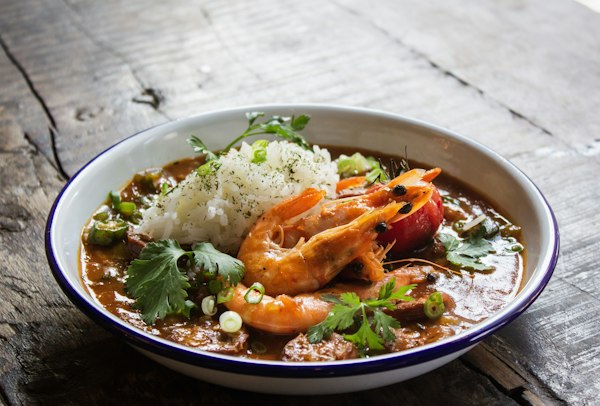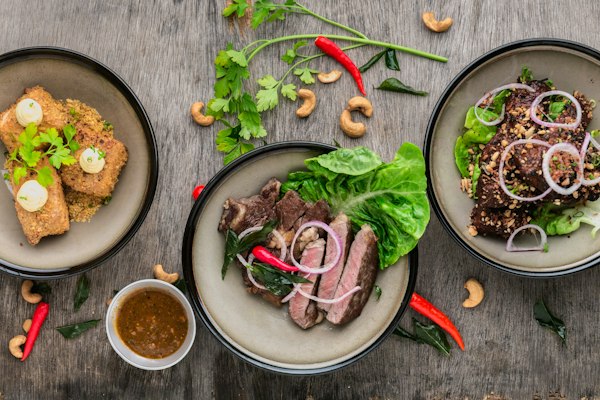
The jollof wars have been raging for decades. Ghana claims the original. Nigeria claims the best. Senegal says both are missing the point. Twitter has been a war zone. The debate is real, the passion is genuine, and the food — whichever version you are eating — is extraordinary. We went to Dubai's West African restaurants and ate both side by side to give you an honest, specific answer to the question Dubai's African community argues about every weekend.
🇬🇭 Ghanaian Food in Dubai — Full Guide Series
Cuisine, culture, all dishes
Ranked guide
Rice and beans guide
Spiced fried plantain
This page — the taste test
Ghanaian Jollof
Fragrant, delicate, tomato-sweet
Nigerian Jollof
Smoky, intense, fire-kissed
The Differences — What Actually Changes Between the Two
Both are jollof rice — that is, rice cooked in a tomato-pepper-onion base. But the cooking method, the rice variety, the spice profile, and the finishing technique are all meaningfully different. Here is the full breakdown:
| Element | 🇬🇭 Ghanaian Jollof | 🇳🇬 Nigerian Jollof |
|---|---|---|
| Rice Type | Long-grain or fragrant rice, sometimes basmati | Long-grain parboiled rice (e.g. Uncle Ben's style) |
| Tomato Base | Tomatoes, peppers, onion — less concentrated, slightly sweeter | Tomatoes, scotch bonnet, tatashe (bell pepper) — highly concentrated |
| Spice Profile | Bay leaves, mixed spice, sometimes curry powder — aromatic and gentle | Seasoning cubes, bay leaf, thyme — rich and intense |
| Heat Level | Moderate — warm but not fiery | Variable — can be very spicy, especially 'party jollof' |
| Smokiness | Little to none | Significant — the 'party jollof' bottom-burn (socorrat) is celebrated |
| Colour | Orange-red, slightly lighter | Deep red to orange — darker and more saturated |
| Texture | Slightly more separated grains | Clumpier, stickier, wetter |
| Common Accompaniments | Fried chicken, kelewele, coleslaw | Fried chicken, moinmoin, fried plantain (dodo) |
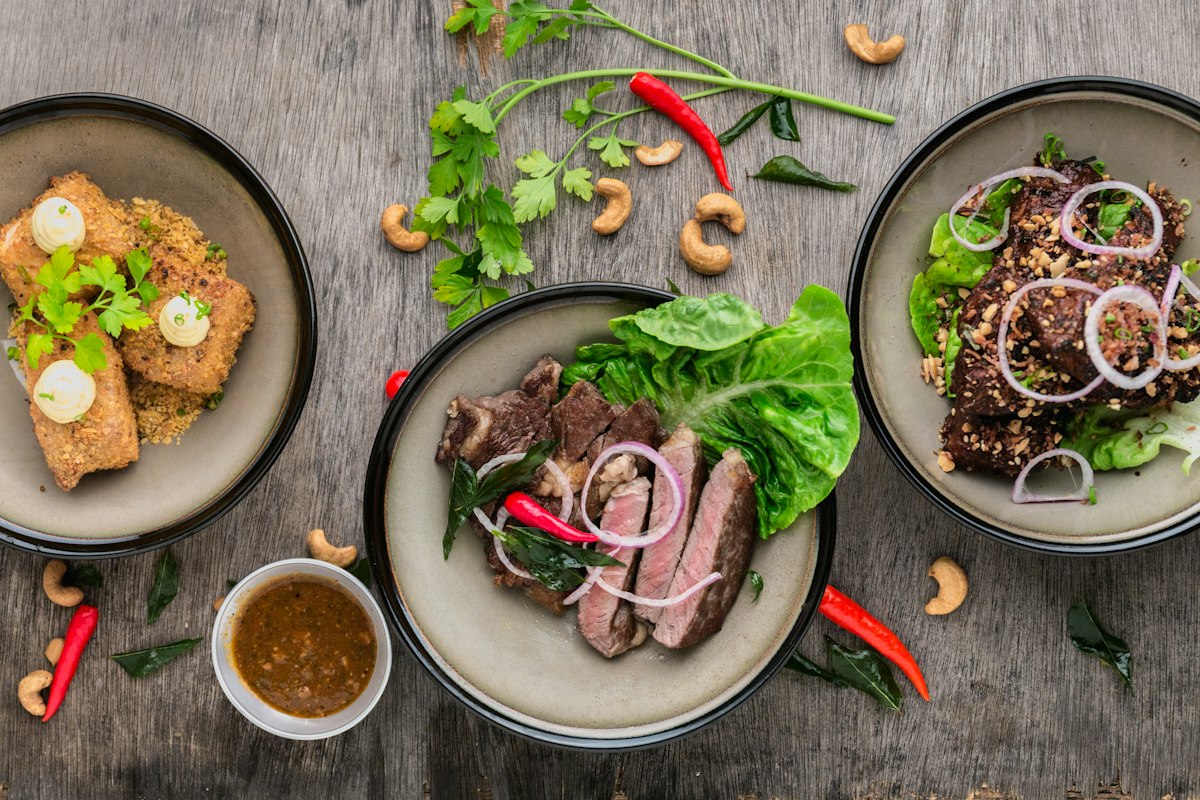
The colour of the tomato base, the smoke level, and the rice grain texture are the three most immediately noticeable differences between the two styles.
The Dubai Taste Test — Our Findings
We ate Ghanaian jollof and Nigerian jollof at three Dubai restaurants over two visits each. Here are our notes on each style as encountered in Dubai specifically:
🇬🇭 Ghanaian Jollof — Dubai Assessment
The Ghanaian jollof we encountered in Dubai — primarily at KIZA in DIFC, Biggy's in Karama, and Africana Home in Deira — was consistently more delicate and fragrant than its Nigerian counterpart. The tomato base is less aggressively seasoned, the rice grains are better separated, and there is an aromatic quality from the mixed spice and bay leaf that Nigerian jollof does not have.
At KIZA, the Ghanaian jollof was served with a properly spiced fried chicken and kelewele — a beautiful combination. The rice had good depth without heaviness, and the tomato flavour was distinct rather than blended into background. At Biggy's, the version was simpler and slightly drier, but extremely honest to how Ghanaian family jollof actually tastes.
Where Ghanaian jollof loses points in Dubai is availability and the smoke: the signature 'party jollof' bottom-burn that gives Nigerian jollof its distinctive character has no equivalent in the Ghanaian tradition, and for many diners, that smokiness is the peak jollof experience.
🇳🇬 Nigerian Jollof — Dubai Assessment
Nigerian jollof in Dubai is more widely available and more consistently excellent across restaurants. The best version we found was at a dedicated Nigerian spot in Karama that produces what Nigerians call 'party jollof' — the festive version that is slower-cooked over wood or charcoal, allowing the bottom of the pot to catch slightly and impart deep, almost barbecue-like smokiness to the rice. This version is revelatory.
The scotch bonnet in Nigerian jollof gives it a fruity heat that Ghanaian jollof simply does not have, and the deeper concentration of tomato and pepper means it pairs better with rich, heavily spiced proteins like peppered chicken or goat. It is a bolder dish, in every sense of the word.
The main weakness of Nigerian jollof in Dubai is inconsistency. When it is made well — properly smoky, richly seasoned, with rice that still has texture — it is arguably the better dish. When it is made carelessly — oily, lacking smoke, with overcooked mushy rice — it disappoints. Ghanaian jollof is harder to mess up.
The Verdict
If you are eating alone or with a small group and you want a dependable, consistently excellent plate of jollof rice, Ghanaian jollof is the safer and more reliably satisfying choice in Dubai. It is more consistent, more fragrant, and more delicate.
If you are at a party, a celebration, or at a restaurant that specifically makes good Nigerian party jollof — Nigerian jollof at its best is the more thrilling experience. The smoke, the heat, the intensity — when done right, it is one of the most memorable rice dishes in the world.
The honest answer: both are extraordinary. Eat both. Order kelewele with the Ghanaian one and fried plantain with the Nigerian one. Then decide for yourself.
Where to Eat Each Style in Dubai
Best Ghanaian Jollof in Dubai
- KIZA (DIFC): The most polished Ghanaian jollof in Dubai. AED 85–110 as a main. Book ahead.
- Biggy African Restaurant (Karama): The most authentic Ghanaian-style jollof at the best price. AED 35–50.
- Africana Home (Deira): Fragrant Ghanaian jollof served with fried chicken or fish. AED 45–65.
Best Nigerian Jollof in Dubai
- Nigerian community spots in Karama: Ask locally or search Talabat for 'Nigerian restaurant Karama' — several small spots make excellent party jollof on weekends.
- Biggy African Restaurant (Karama): Occasionally makes Nigerian-style jollof depending on the day's menu.
- KIZA (DIFC): The African kitchen at KIZA produces both Ghanaian and Nigerian jollof variants depending on season and menu rotation.

FAQ — Jollof Rice in Dubai
What is the difference between Ghanaian and Nigerian jollof rice?
The key differences are: rice variety (Ghanaian uses fragrant long-grain, Nigerian uses parboiled), spice profile (Ghanaian is aromatic with mixed spice and bay leaf, Nigerian is more intensely seasoned with scotch bonnet), smokiness (Nigerian party jollof has a characteristic smoky bottom-burn, Ghanaian does not), and texture (Nigerian tends to be wetter and stickier, Ghanaian has more separated grains).
Which jollof rice is the original?
Jollof rice is believed to have originated among the Wolof people of Senegal and Gambia, making the Ghanaian vs Nigerian debate somewhat moot from a historical perspective. The dish spread across West Africa centuries ago and every country developed its own tradition. Ghana's version is influenced by the coastal rice-growing traditions; Nigeria's by Yoruba and Igbo cooking styles.
What is 'party jollof'?
Party jollof is the Nigerian term for jollof rice cooked over very high heat — traditionally firewood — in large quantities for celebrations. The high heat causes the bottom layer of rice to catch and smoke slightly, imparting a distinctive smoky, almost barbecue-like flavour to the entire pot. This smoke is the most sought-after quality in Nigerian jollof and is extremely difficult to replicate on a domestic gas hob.
Can I get jollof rice delivered in Dubai?
Yes — jollof rice is available via Talabat and Deliveroo from several African restaurants in Dubai. Search for 'jollof rice Dubai' on either platform. Note that Nigerian party jollof does not travel as well as Ghanaian jollof, as the smoky character diminishes in a takeaway container.